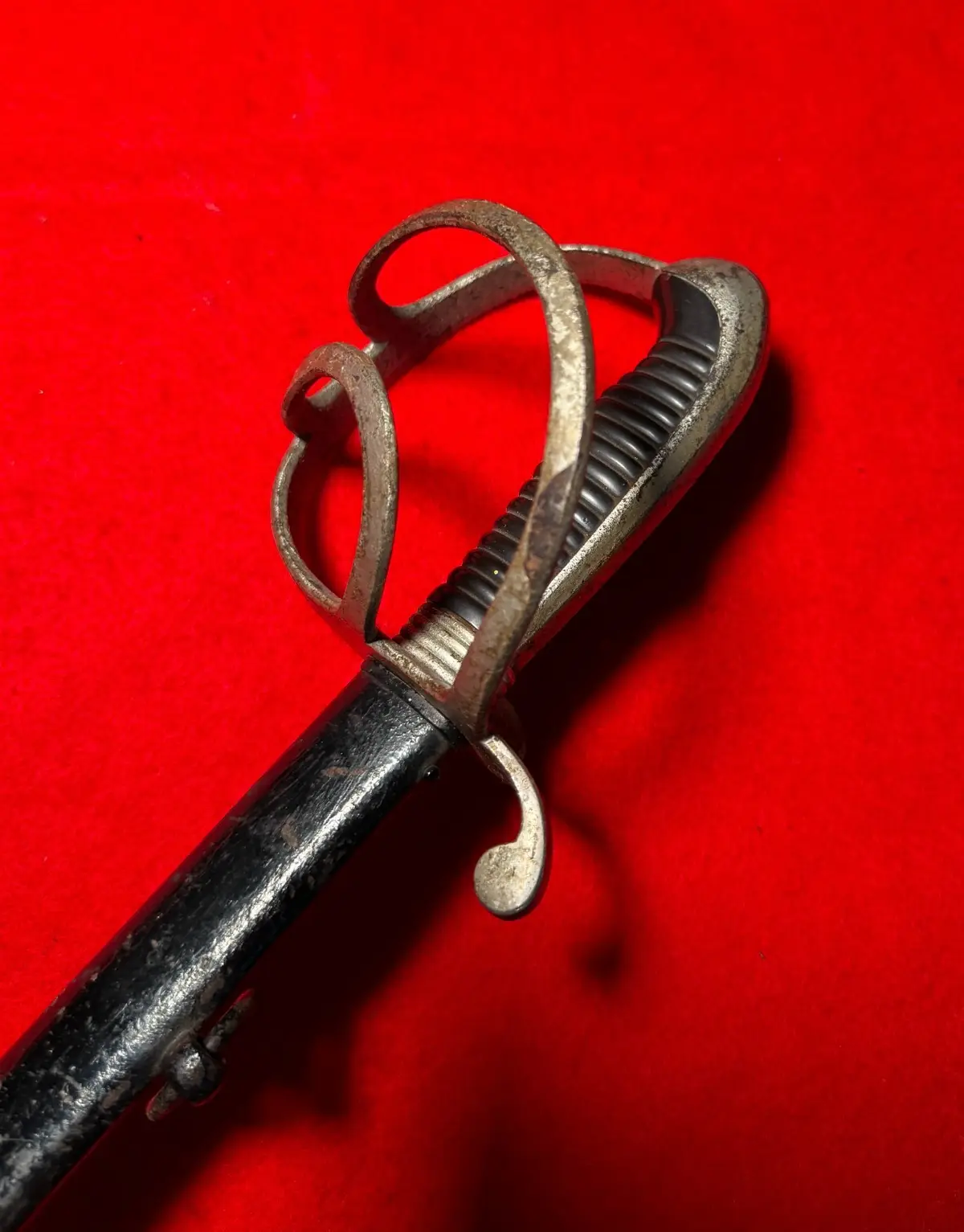
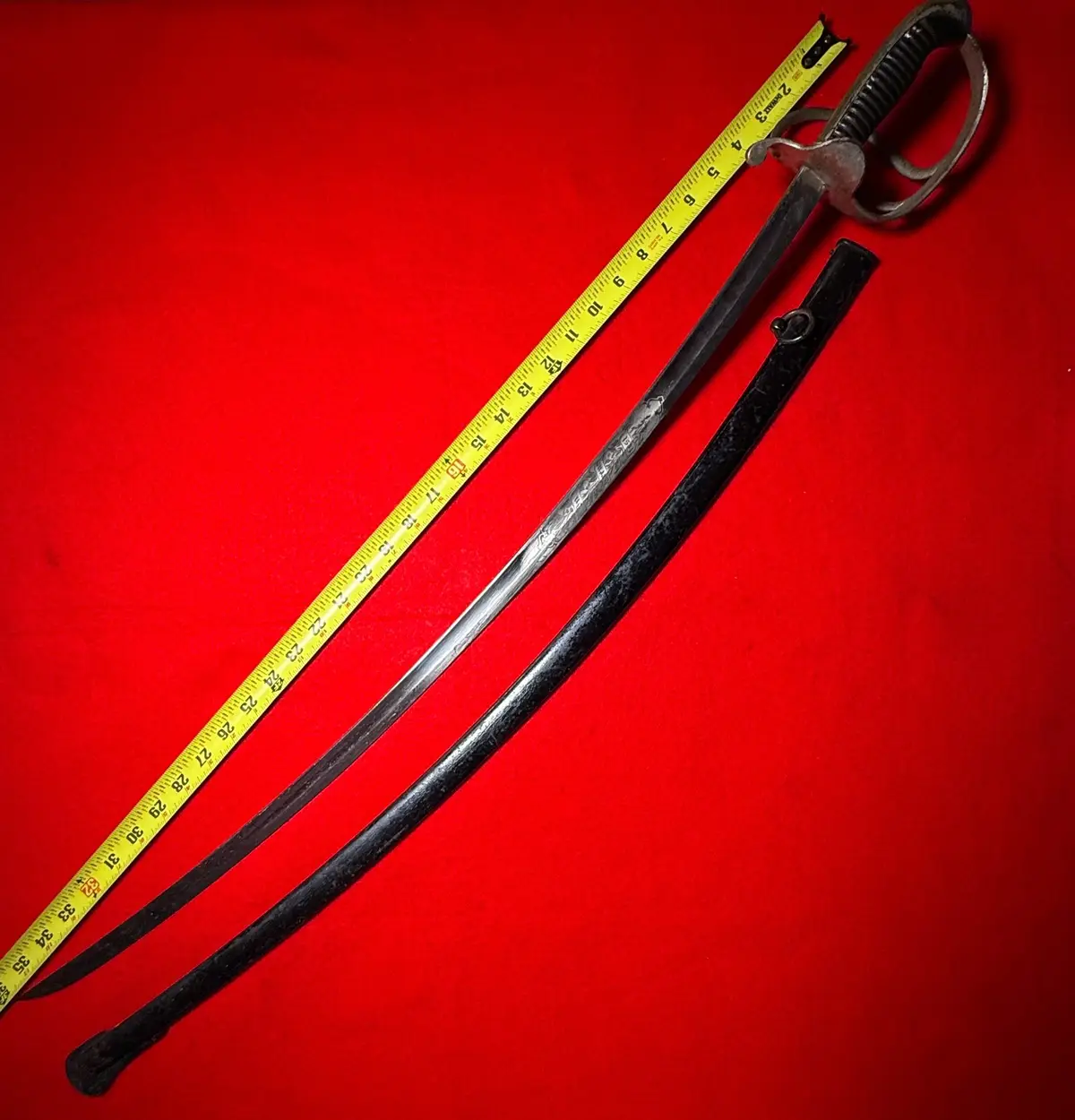
Klingenthal
France built a royal blade manufactory in Alsace to stop buying swords from Solingen, then staffed it with smiths poached from Solingen, who named the place in German.
A German name on a French hill
On 15 July 1730 Louis XV signed letters patent for the establishment of a royal manufactory of edged weapons in Alsace, granting Jean-Henri Anthès the commission to run it for thirty years. The reason was set out without embarrassment: French sword-cutlers bought their blades from Solingen, in the Duchy of Berg, and the war ministry wanted that to end.
Nicolas Prosper Bauyn d'Angervilliers, Secretary of State for War from 1728 and intendant of Alsace from 1716 to 1724, drove the project. Anthès, who already worked forges in Upper Alsace, took the valley of the Ehn above Obernai: falling water for hammers and grindstones, forest for charcoal, sandstone for wheels, and Strasbourg within reach.
The workmen named the site. Klingenthal, valley of blades. An early form recorded is Klingen-Schmiede im Ehn-Thal, the blade-forges of the Ehn valley. A manufactory founded to break French dependence on German blades took a German name from the German smiths hired to build it, and carries it still. The village was never erected as a commune of its own: it sits across Boersch and Ottrott, roughly four fifths in the first and one fifth in the second.
Ten men from Solingen
The first contingent, brought in January 1730, was about ten. By 1731 there were some twenty-five Solingen masters with a comparable number of assistants, and the first grinding shed was built. Two more went up in 1734, along with hydraulic works to regulate the water. Recruiters also drew on Remscheid and on Saint-Blaise in the Black Forest.
Leaving Berg was illegal. On 1 November 1723 Karl Philipp, whose territories included the duchy, issued strict regulations against craftsmen who left: they would forfeit their property and see their names posted on the gallows. Repeated threats did not stop the emigration. Guild rules were narrowly drawn and strictly enforced, and wages often came as goods rather than coin.
The surnames in the Klingenthal registers are Solingen surnames: Engels, Wundes, Nippes, Hartkopf, Evertz, Kind, Stamm, Aschauer. The Alsatian dialect spoken in the valley is one of the reasons the museum gives for the choice of site, alongside the water and the wood.
A village that was a factory
The plant grew the way a company town grows. A road to Obernai was cut in 1748. A chapel dedicated to Saint Louis followed in 1761. By the Restoration the site ran three steelworks and five grinding sheds, with dependent works at Gresswiller, Baerenthal and Mutzig.
The workforce tracks the wars. Something near two hundred under Louis Antoine Gau in the later eighteenth century, more than four hundred during the Revolution, more than six hundred under the Empire, spread across twelve trades. A blade passed through separate hands — forging, grinding, hardening, polishing, mounting — each trade with its own shed and its own master. That is the Solingen division of labour, transplanted into a valley chosen partly because the men brought from Solingen could make themselves understood in it.
Under the entrepreneurs Louis Antoine Gau and Jean Daniel Oesinger, between 1765 and 1784, the manufactory's own chronology places the moment its output passed Solingen's.
The Empire's arithmetic
The name changed with the regime and nothing else did. Royale until the Revolution, then Nationale, then Impériale from 1804, then Royale again after 1815. The same grinders worked the same wheels through all four.
The Coulaux brothers took the works in 1801, when Jacques Coulaux installed his brother Julien at the head of the Klingenthal manufactory. Jacques turned to firearms at Mutzig, setting up production there in 1803 in the former episcopal castle. A gold medal was awarded to the arms of Klingenthal at the exposition of 1806.
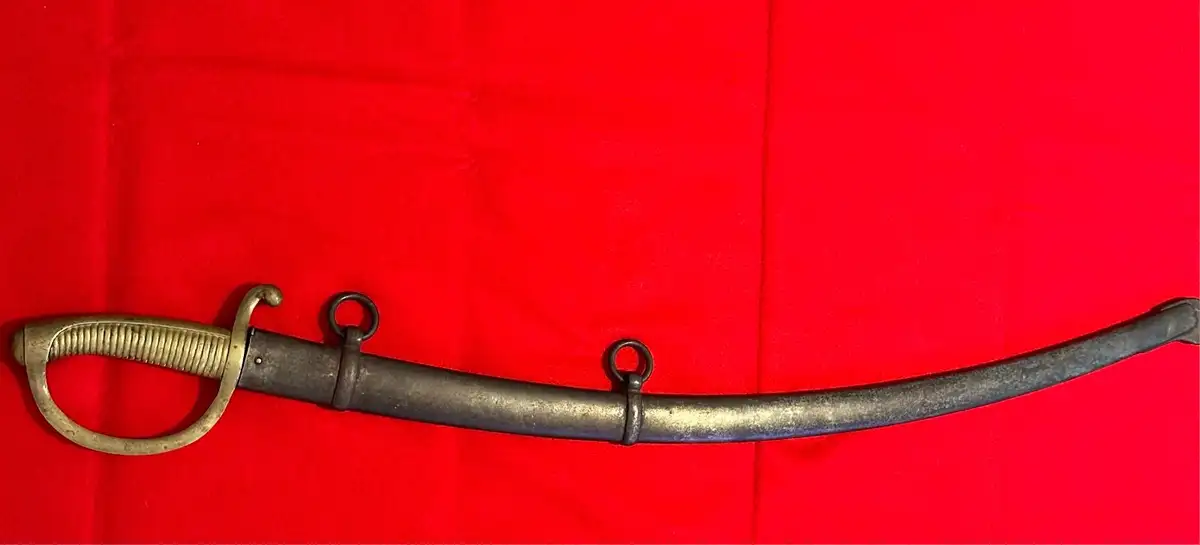
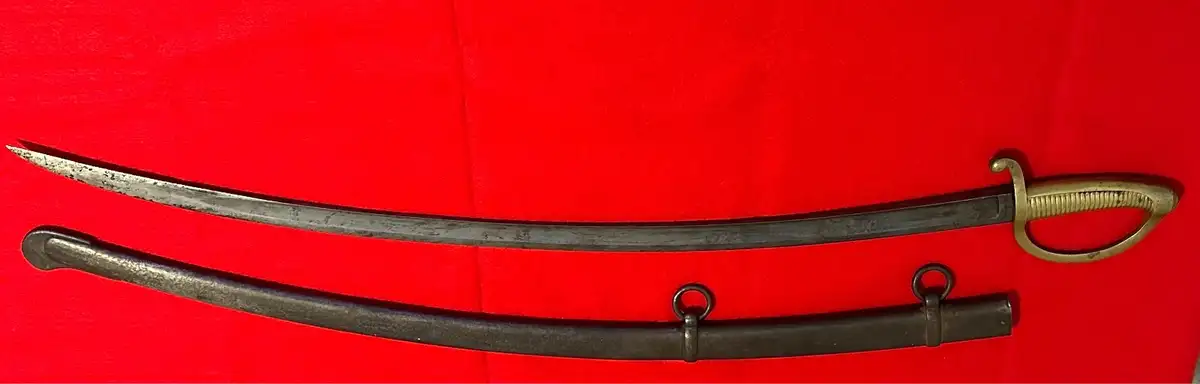
Klingenthal supplied the An IX and An XI cavalry patterns, the straight blades of the heavy horse and the curved ones of the light. Output of swords and cavalry sabres stood at 32,000 in 1811 and at close to 71,000 in 1813, more than double in two years, on water power and hand grinding. A breakdown for 1810 counts about 590 skilled workers — 15 steel refiners, 100 blade smiths, 9 hardeners, 103 grinders, 194 finishers, and the rest across the remaining trades. The maximum the works ever reached was 679.
Too near the frontier
The thing that killed it was geography, the same geography that had built it. A state arms works less than thirty kilometres from the Rhine looked less like an asset than a hostage. Louis XVIII founded a new blade manufactory at Châtellerault, deep in the Vienne, by ordinance of 14 July 1819. The decision to wind down Klingenthal was taken in 1830; the last government order for cuirasses came in 1835; state production ceased in 1836.
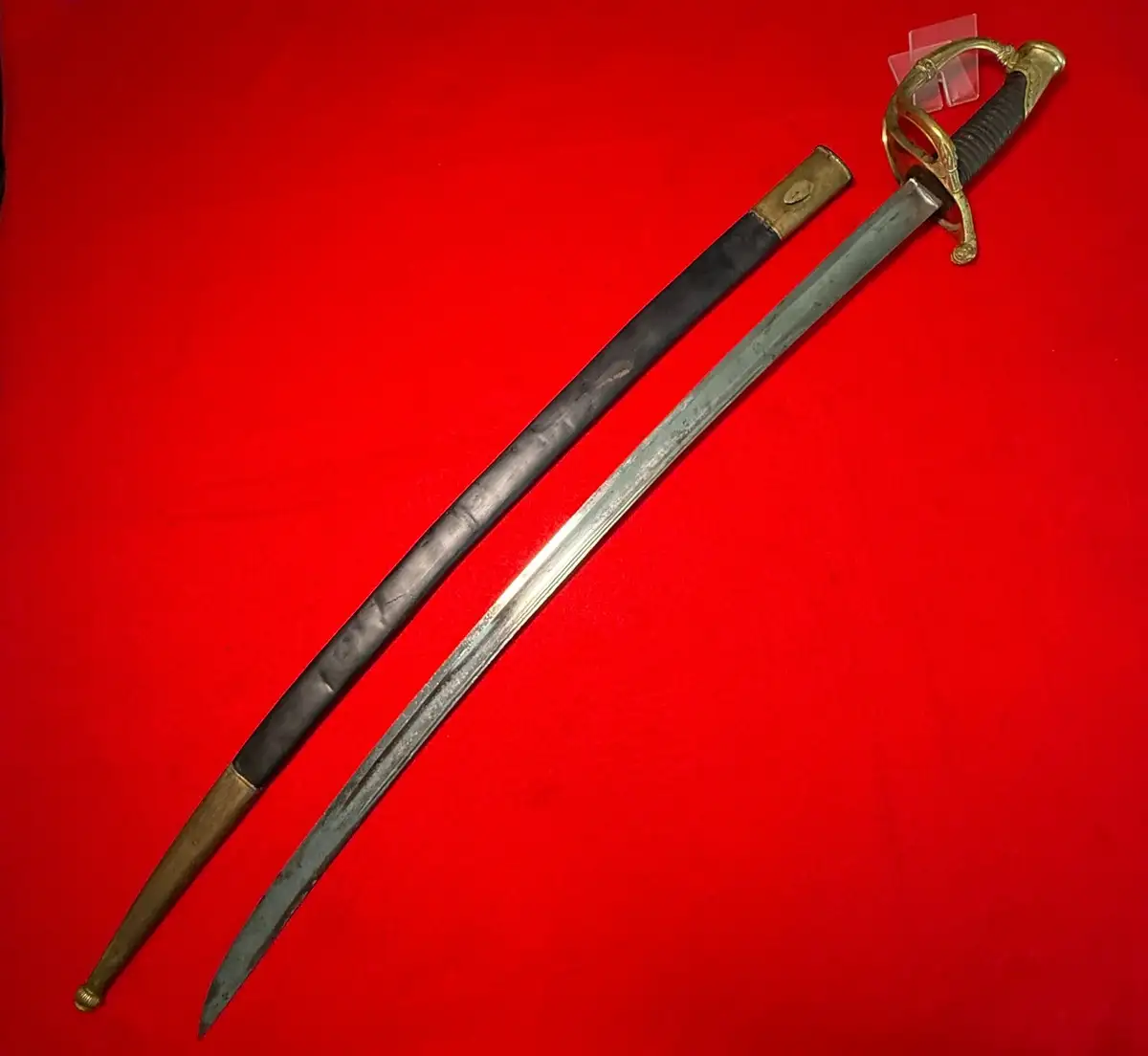
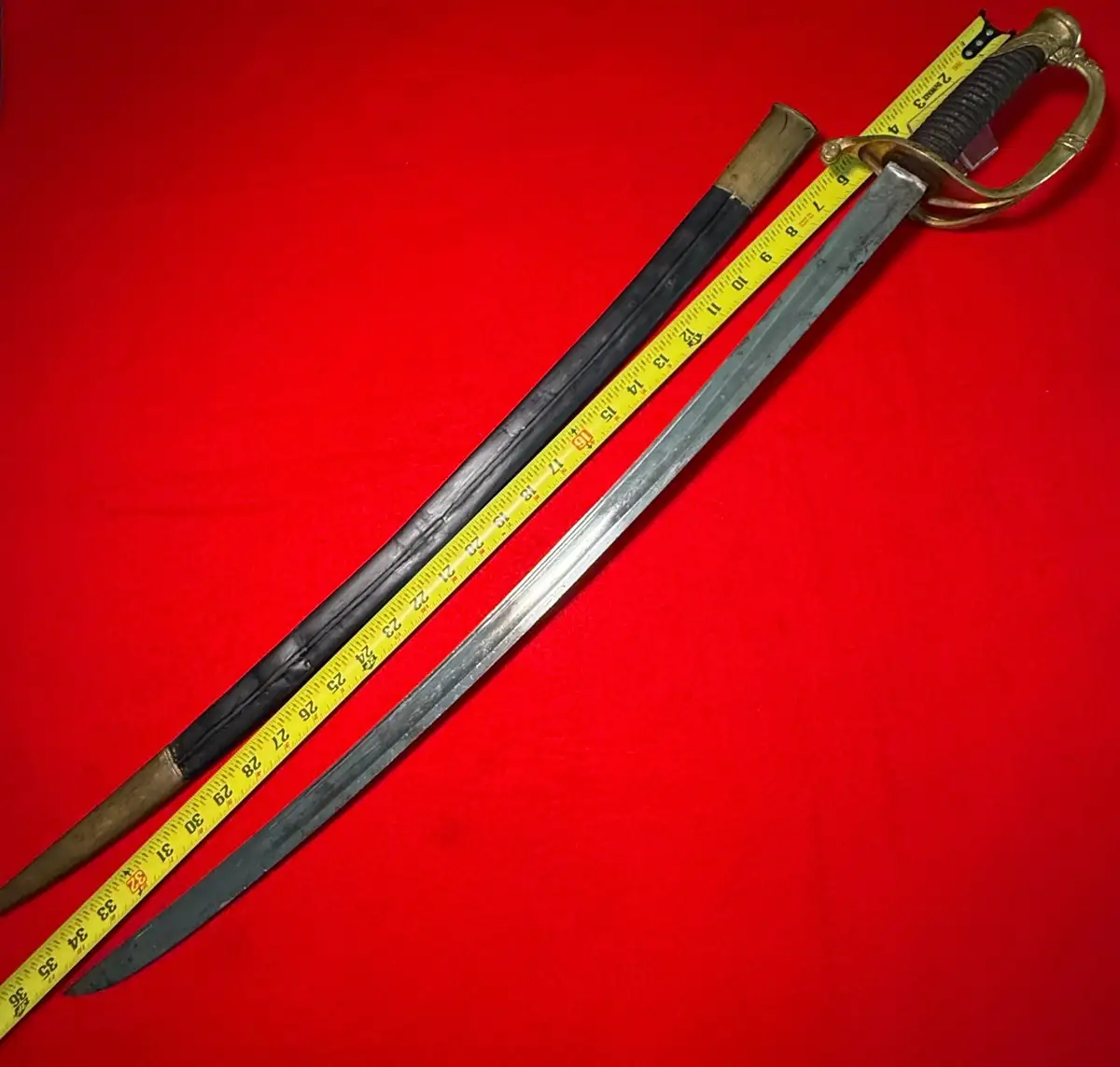
In 1838 the manufactory was sold at auction and the Coulaux family bought it. The Coulaux works at Klingenthal, Molsheim, Mutzig and Gresswiller ran as one concern, passing to Charles Louis Coulaux after Julien III's death in 1840. Scythes and sickles from 1840, sold into France, Europe and America. Fencing blades from 1850. Officers' sabres, and sabre-bayonets for the Chassepot rifle of 1866.
In 1871 Alsace was annexed by the German Empire. For forty-seven years the works built to stop France buying German blades stood on German soil. The firm became a société anonyme in 1925, with its seat at Montbrison in the Loire, and Marine-Firminy took the majority of the shares. By 1955 about a dozen men were still forging sickles and civilian tools. On 1 February 1962 the last hammer stopped.
Reading the marks
On Empire and Restoration blades the manufactory's title runs in cursive along the spine, followed by the month and the year. Recorded examples read "Manufacture Royale du Klingenthal Xbre 1820", "Mfture Impale du Klingenthal 9bre 1813", "Manuf Rl du Klingenthal Xbre 1819". The month appears either written out in full or in the old French abbreviations — 7bre, 8bre, 9bre, Xbre for September, October, November and December — which catches out readers who take Xbre for October and 9bre for September. Do not assume the dated form on eighteenth-century work.
The inspection marks sit elsewhere. On the heel of the blade near the tang, a fleur-de-lys or a crown stood for the state manufactory until about 1790; after that the stamp became the first letter of the inspector's name, with the first letter of the chief inspector's name beside it. Mounts and scabbards carry the stamp of the inspector responsible for that part, so a scabbard's mark and a blade's mark need not agree even on an untouched sword.
A contract of 1823 is reported to have reserved the royal manufactory spine mark, with month and year, for arms delivered to the government, commercial work being signed "Coulaux frères à Klingenthal". Blades and smallswords carrying that mark, and the later "Coulaux & Cie Klingenthal", do exist. The rule rests on a single specialist author and should not by itself be used to reject a blade.
What to look for
- On Empire and Restoration blades the maker's name runs in cursive along the spine, not on the flat, and gives the manufactory's title plus a month and year — read Xbre as December, 9bre as November, 8bre as October, 7bre as September, and expect the month written out in full just as often.
- Inspector stamps sit on the heel of the blade near the tang: a fleur-de-lys or crown for the state manufactory up to about 1790, and single initial letters of the inspector and the chief inspector after that.
- The title in the spine mark should match the regime in the date beside it — Royale before the Revolution, Nationale under the Republic, Impériale from 1804, Royale again after 1815; a mismatch needs an explanation.
- A mark reading Coulaux frères à Klingenthal or Coulaux & Cie Klingenthal points to commercial or post-1838 private production rather than state-manufactory work.
- Scabbard and hilt fittings carry their own inspector's stamps, assigned to whoever passed that component, so blade and mount marks can differ on an original assembly.
- Fencing blades from Klingenthal date to 1850 or later, when the Coulaux firm began making them; Coulaux & Cie marks on fencing blades appear in block letters or in acid-etched cursive.