russian M1881 Shashka
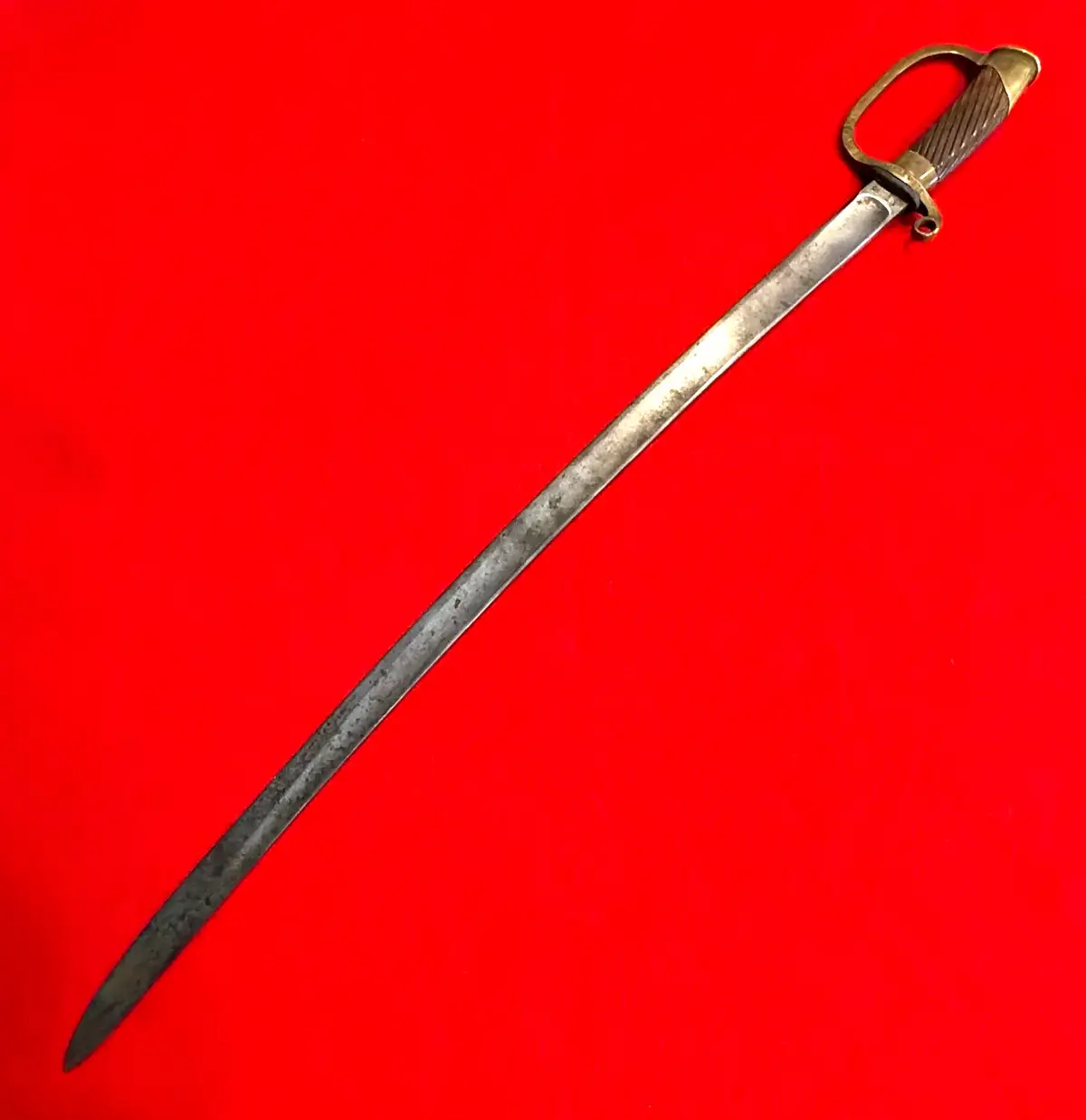
Known in the trade as M1881 Shashka.
Announced on 4 August 1881 by War Ministry Order No. 222, the M1881 gave the dragoon and the Cossack near-identical blades in two unrelated hilts, and swept the sabre out of the russian cavalry — and almost every question a buyer has about it is a question about the hilt.
What the 1881 order actually did
The adoption of the 1881 edged-weapon system was announced on 4 August 1881 by War Ministry Order No. 222. It was a system, not a single weapon: shashkas for the regular troops, Cossack shashkas, and a cuirassier broadsword, all in wooden scabbards. The broadsword was adopted on paper and never went into mass production; it did not reach the troops, and it is not a weapon a buyer will meet. A shortened version of the dragoon shashka was added in 1882.
The reform ran under Lieutenant-General A. P. Gorlov, russian military attaché in London. He drew on two things at once: British service blades built to thrust, and the Caucasian shashka, which the russian army had spent decades on the receiving end of and rated above anything of its own for the cut. Sample blades were made by Wilkinson and put before a commission, which argued over them for years.
The commission declined to issue one universal weapon. It settled instead on two hilt traditions carrying near-identical blades — a brass knuckle bow for dragoons and the rest of the line cavalry, a guardless hooked grip for the Cossacks. What went out of service in 1881 was the older mixture: cavalry, dragoon and infantry sabres, and cuirassier broadswords, for officers and lower ranks alike. Four Guard cuirassier and two Guard hussar regiments kept their earlier weapons for parade dress from 1882. The Caucasian Cossack hosts were exempted and kept weapons of Asian construction.
One blade, three ways of fitting it out
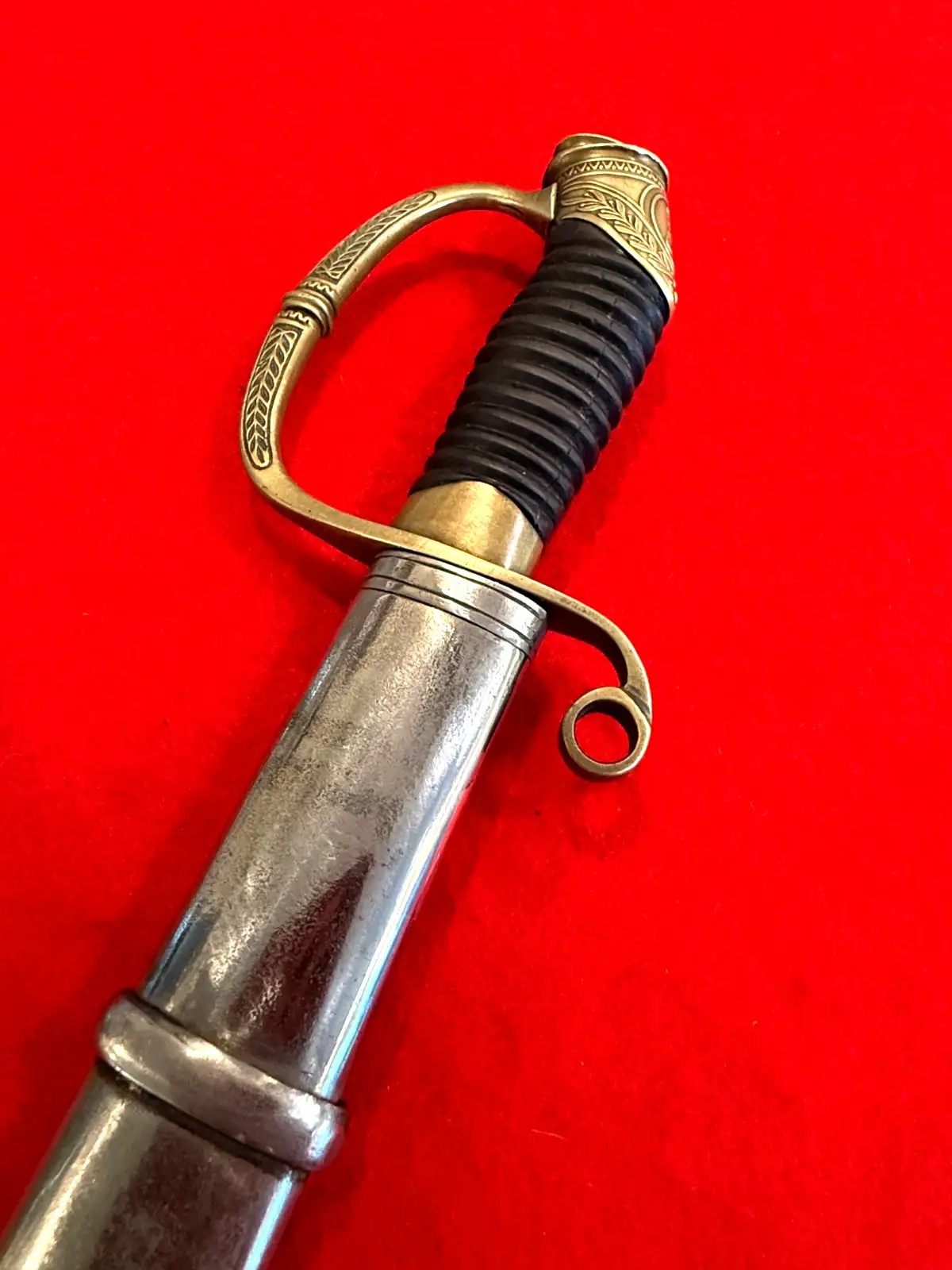
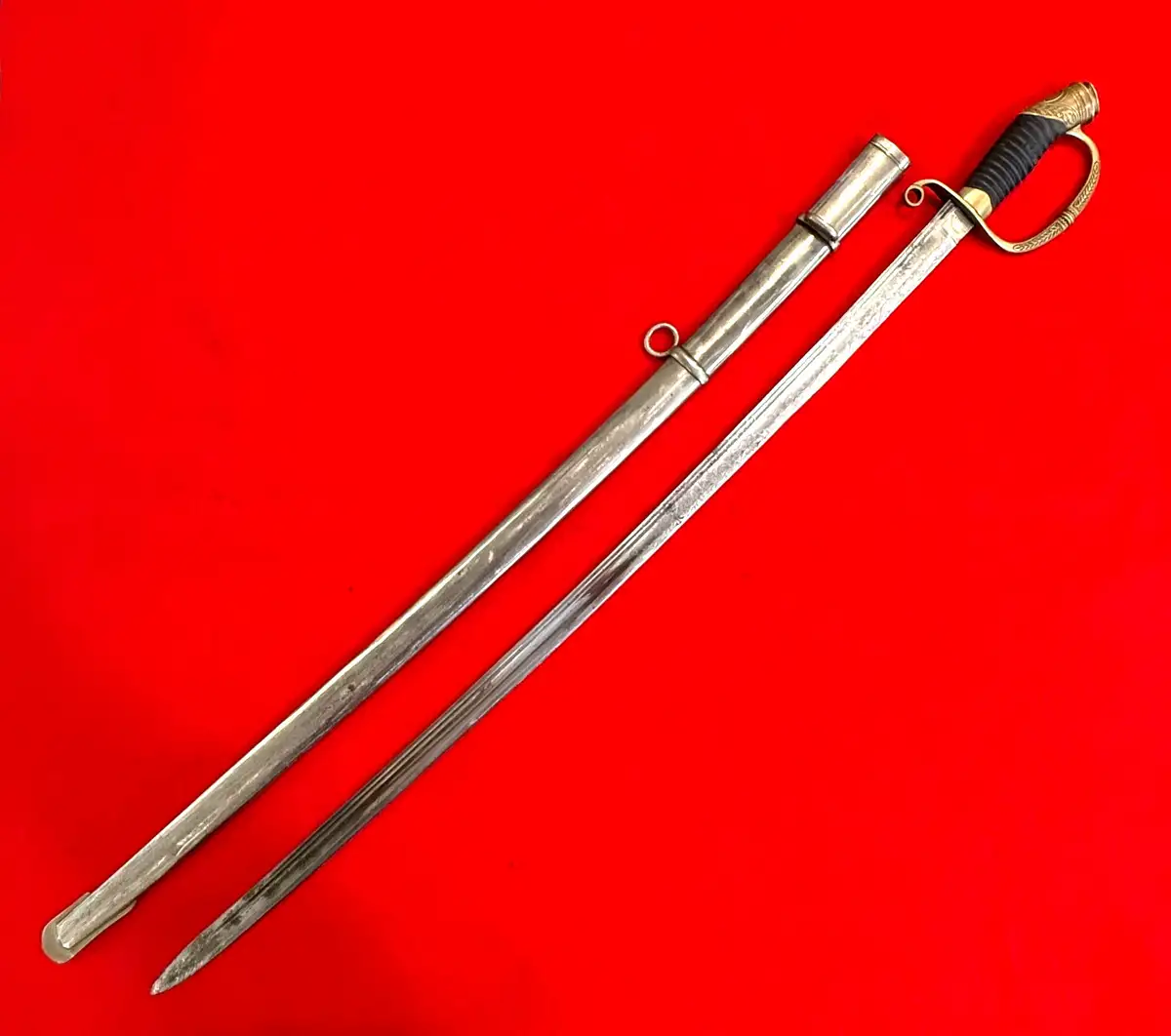
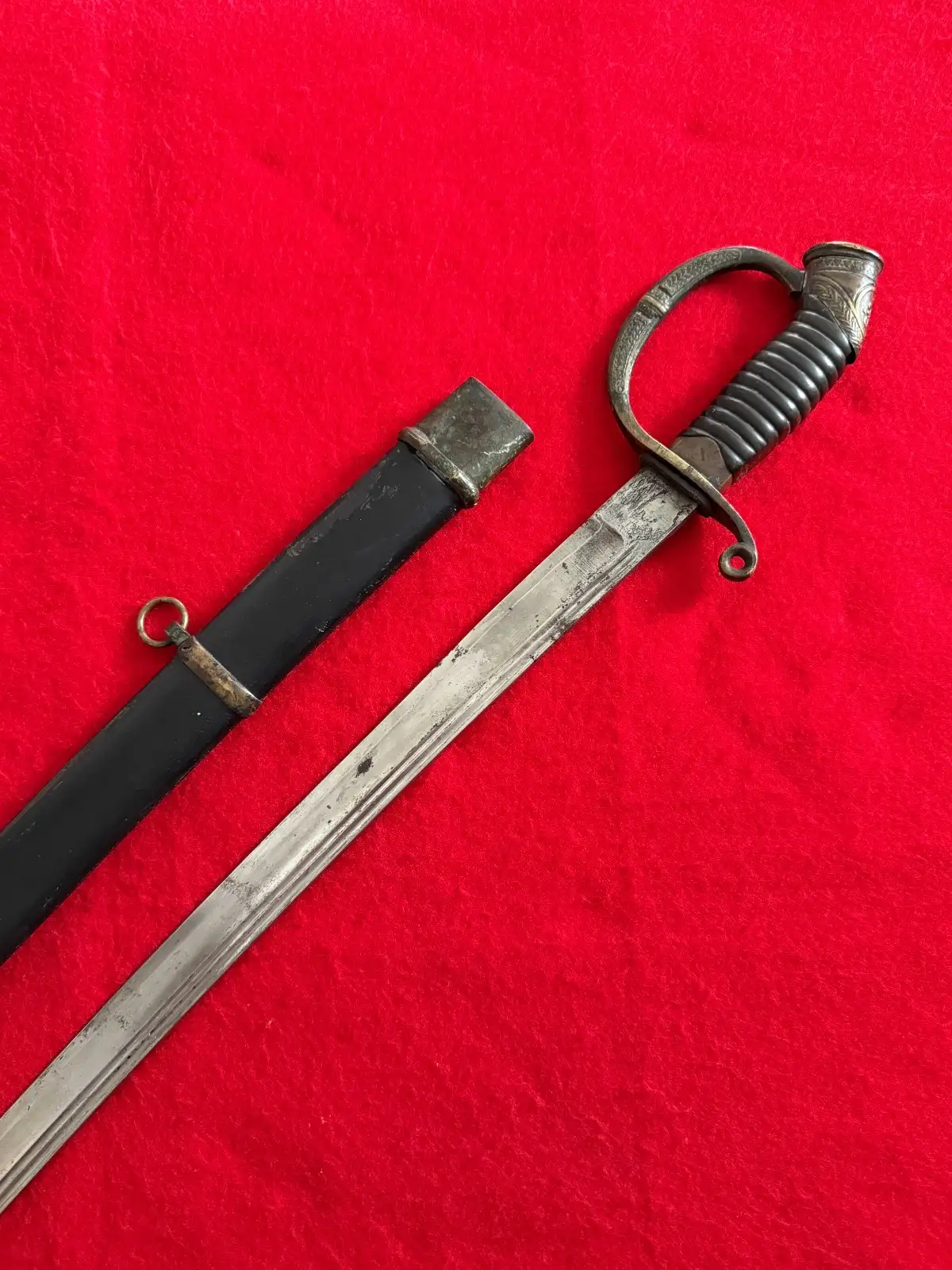
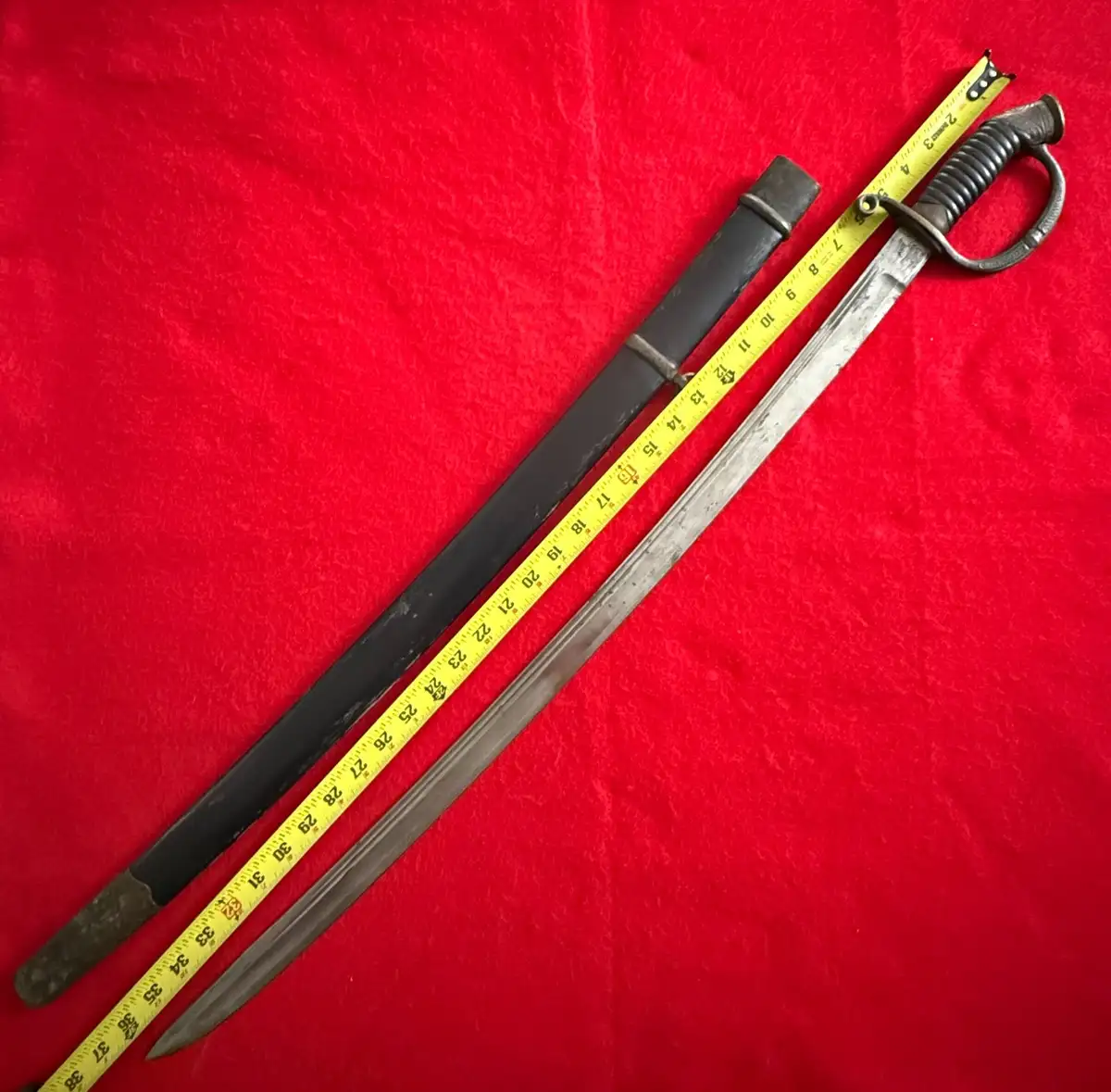
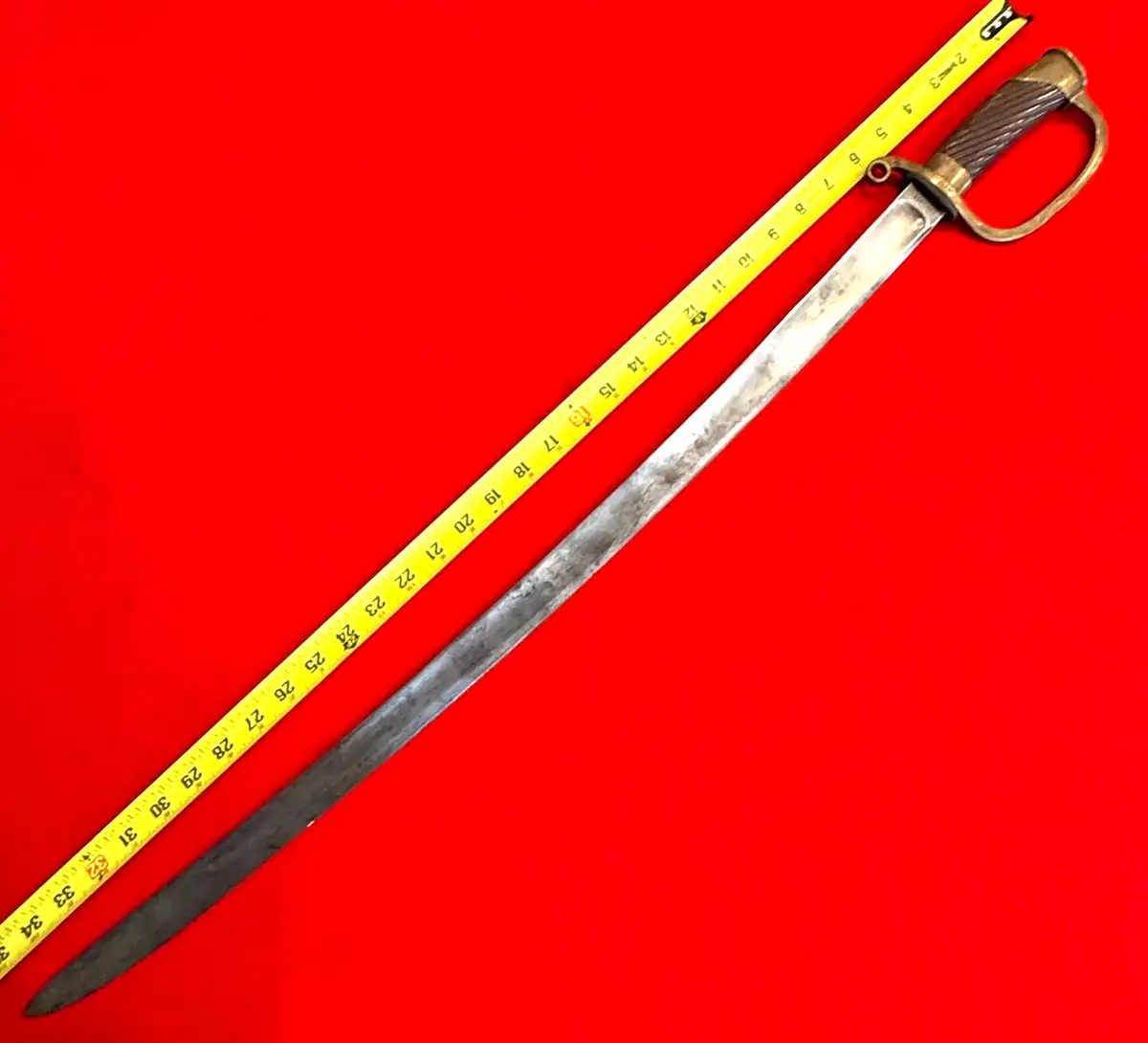
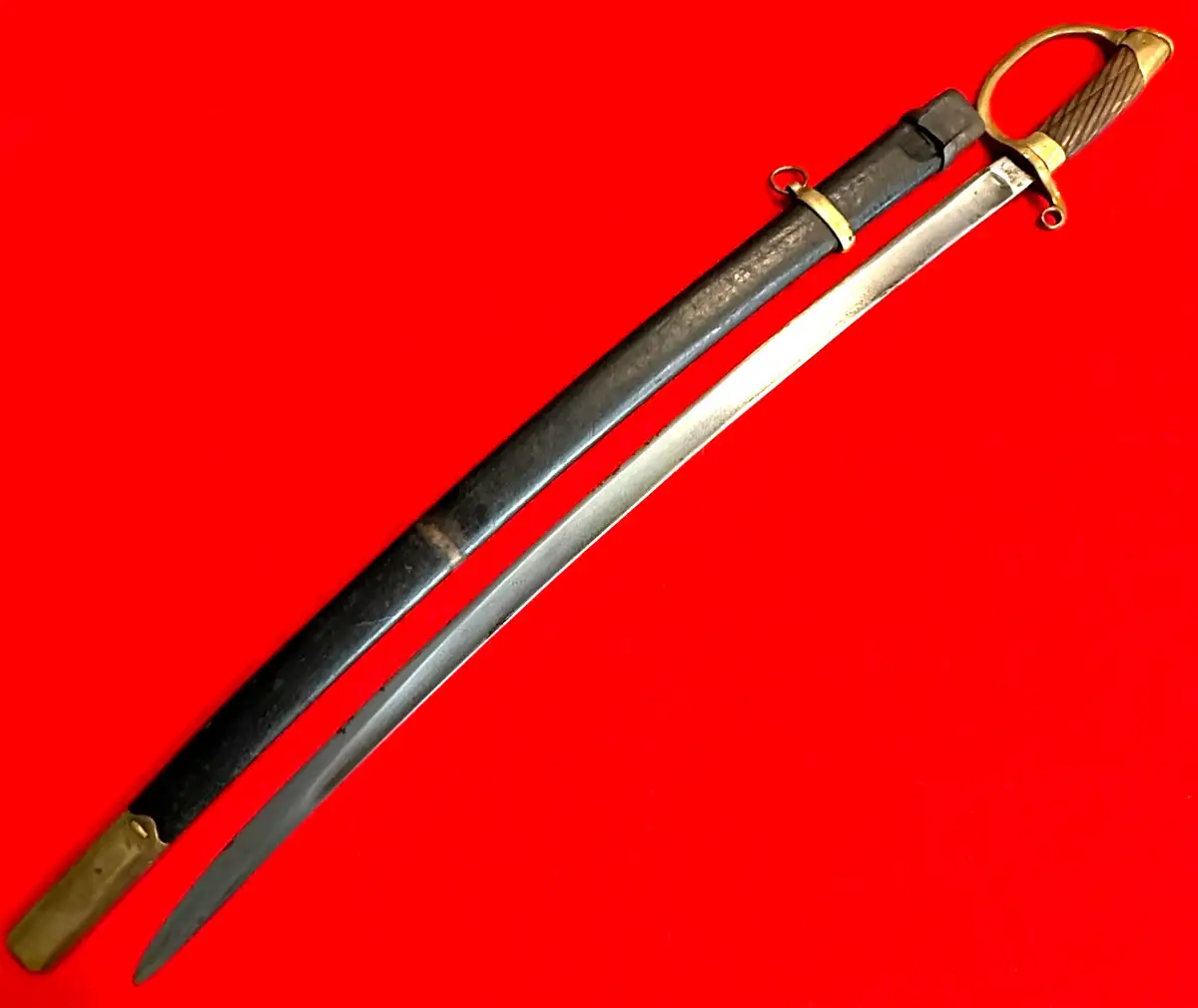
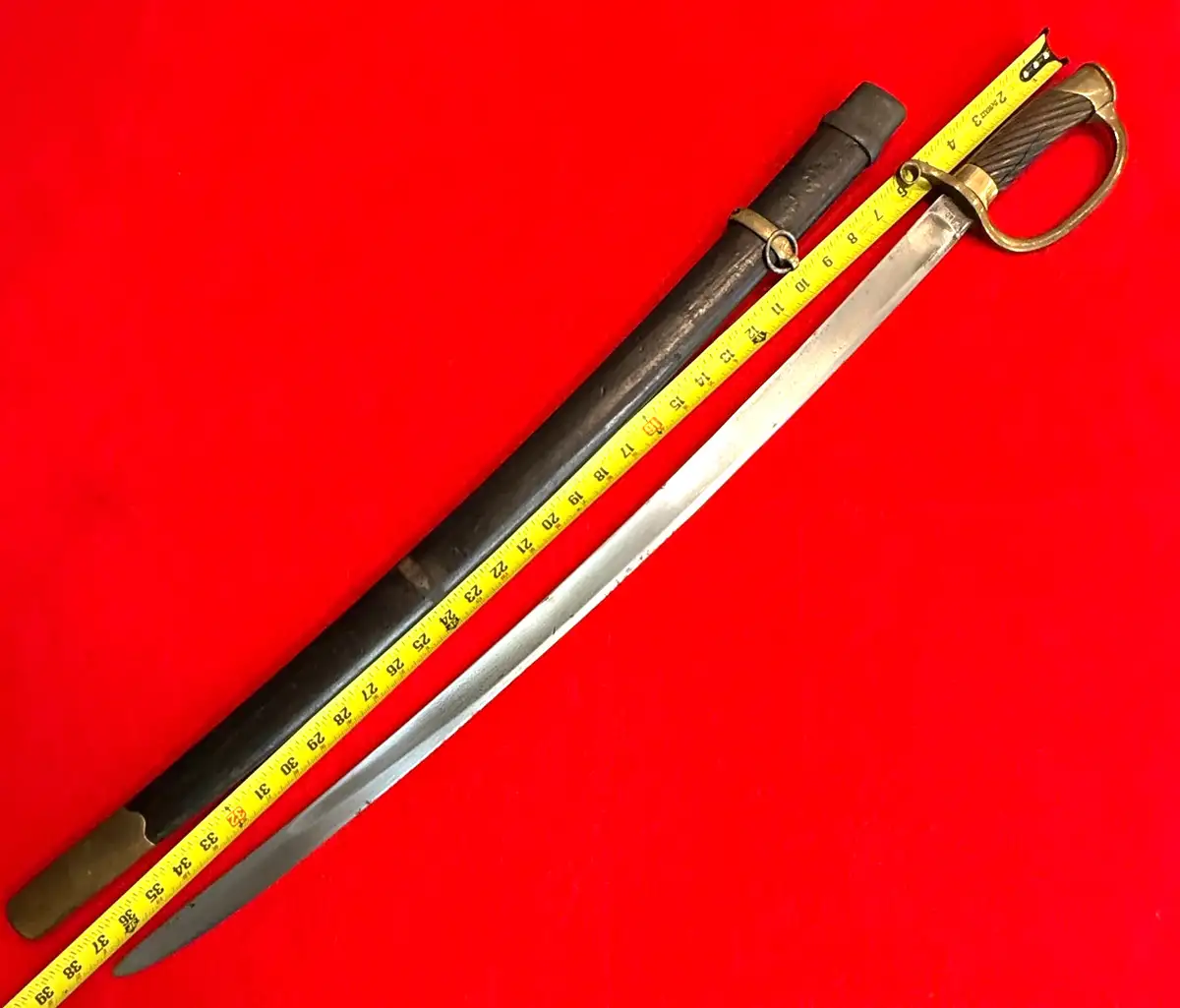
The enlisted dragoon shashka runs about 1,050 mm overall on a blade of about 870 mm, up to 33 mm wide, with slight curvature, one broad fuller, and a double-edged point. The hilt is a wooden grip with slanting grooves, a shaped brass ferrule, an oval domed cap, and a brass bow that runs into a quillon turned down and pierced for the sword knot.
Its scabbard is the tell within the system. The dragoon pattern carries the trooper's rifle bayonet on the outside of the scabbard, so sword and bayonet travel as one item of kit; the Cossack scabbard has no such fitting. Scabbards of 1881 to 1888 seat the bayonet in a wooden block, later ones in metal bands. The form of the mount changed over the pattern's life; its presence on the dragoon scabbard did not.
The Cossack shashka takes the same blade and drops the bow. The grip is wood with slanting grooves and a metal ferrule at its lower end, and the head is brass, cleft, and pierced for the sword knot. Nothing protects the hand. Overall length comes out around 1,020 mm on the same 870 mm blade, up to 33 mm wide.
Officers' shashkas are shorter, and the two officers' patterns are not interchangeable in their measurements. The dragoon officer's runs about 890 mm overall on a blade of about 810 mm, up to 23 mm wide, at up to about 1,150 g. The Cossack officer's runs about 960 mm overall on a blade of the same 810 mm order, but its width is quoted at up to 33 mm, at up to about 1,100 g. Blade length, not blade width, is what separates an officer's shashka from a trooper's. A 33 mm blade is not by itself an enlisted blade.
Officers bought their own, so their blades vary: one wide fuller, or two narrow fullers alongside a wide one, where enlisted blades carry the single broad fuller. Etched panels with the double-headed eagle and an imperial cypher are common on officers' blades. The shortened version of 1882, called the shortened dragoon shashka or the artillery shashka in the orders, carries the dragoon hilt on a blade approved at 30 inches — 762 mm.
The 1909 and 1910 hilts
A new hilt for the officer's dragoon shashka was approved on 11 November 1908. Its drawing and description were promulgated by War Department Order No. 102 of 11 March 1909, and Main Staff circular No. 51 of 22 March 1909 recorded that nothing beyond the hilt and the blade etching had changed. Hilts of the old pattern were permitted until 1 January 1912. The Cossack officer's equivalent was announced by War Department Order No. 323 of 7 July 1910 and is catalogued as 1881/1910.
The blade did not change. The grip did. It was set at a greater angle, thickened through the middle, and the shallow slanting grooves gave way to deep transverse ones. On the dragoon hilt the upper ferrule was cast with foliate ornament and the imperial cypher, and the plain oval cap became a rosette. The Cossack hilt has no upper ferrule: it keeps its beaked cleft pommel, and the ornament and cypher are cast on that instead. Cossack grips of the 1910 hilt are commonly of a black composition rather than bare wood.
Read the cypher correctly. It names the reign in which the officer received his first commission, not the year the sword was made. A hilt with the cypher of Alexander III on a blade dated 1913 is what the regulation intended, not a mismatch. Hilts made under the Provisional Government were produced with the cypher omitted.
The /1909 and /1910 designations belong to officers' weapons. Enlisted dragoon and Cossack shashkas were not re-hilted, and a trooper's shashka dated 1914 is still an M1881.
Marks, and where to read them
Look at the ricasso. Zlatoust blades carry the factory stamp — a double-headed eagle ringed by the works' name in Cyrillic — with a year, often followed by г. for god, "year". Unit and inspection marks turn up on the ricasso and on the brass of the crossguard. Officers' blades sometimes carry the works' name along the spine instead.
Officers' weapons were private purchase, so retailers' and makers' names appear on them where a trooper's blade carries a state factory stamp. Shaf and Sons of St Petersburg is one name you will meet, marked in Cyrillic on blade or guard; Solingen blades are in the mix as well.
Measure from the shoulder where the blade leaves the ferrule, not from the front of the guard. A guard-to-tip figure will read short and put an enlisted blade into the officer bracket.
Telling it from the patterns it is sold as
Against the M1881/1909 and /1910: the argument is settled at the grip. Shallow slanting grooves in bare wood, with a plain oval cap on the dragoon and an undecorated cleft head on the Cossack, are the 1881 hilt. Deep transverse grooves and a swelling through the middle of the grip are the revised hilts — with, on the dragoon, a rosette cap and a ferrule cast with foliage and a cypher, and on the Cossack, the cypher and foliage cast on the beaked pommel itself. Blade length will not separate them: an officer's blade is about 810 mm either way.
Against the Cossack shashka M1838, which the 1881 replaced in every Cossack unit outside the Caucasian hosts — the 1838 having never been carried by the Caucasian or Siberian hosts in the first place. The 1838 blade is longer in the curve and wider, about 875 mm by up to 36 mm, on a weapon of roughly 1,030 mm and up to 1,500 g, and its grip is covered in leather and bound with twisted wire between transverse grooves. The 1881 Cossack grip is bare grooved wood between brass fittings. If it is wire-wrapped, it is not an 1881.
Against Caucasian shashkas: same word, different object. A Caucasian shashka's scabbard swallows the whole hilt up to the ears of the pommel — you see two horn or wood lobes standing above the scabbard mouth and nothing else. A regulation russian shashka sits with its entire grip clear of the scabbard mouth. Craft-made Caucasian weapons carry a maker's mark and often silver mounts with niello, not a state arms-factory stamp; but the russian regulation patterns of Caucasian construction do carry state marks, and the M1904 adopted for the Kuban and Terek hosts is stamped ЗОФ and a year for the Zlatoust arms factory on the outer face of the blade, with ККВ (Kuban Cossack Host) or ТКВ (Terek Cossack Host) on the inner. Construction, not stamps, is what tells the Caucasian form from the 1881 one.
Against the Soviet M1927, which descends from the 1881 Cossack pattern and is sold as Imperial more often than any of these: check the marks rather than the outline, and do not lean on the scabbard. The M1927 was also issued in a version carrying the Mosin bayonet on the scabbard, so a bayonet fitting distinguishes dragoon from Cossack within the 1881 system and says nothing about Imperial against Soviet. Soviet blades carry Soviet stamps and dates from 1928 onward, and later hilts carry a five-pointed star, hammer and sickle where an imperial piece would show the eagle or a cypher. Blade and hilt are dated separately on the M1927 and can differ by years, so one date on one component does not date the sword.
What to look for
- Measure the blade from the shoulder, not the guard: enlisted dragoon and Cossack blades run about 870 mm, officers' about 810 mm. Length is the test, not width — a Cossack officer's blade is quoted at up to 33 mm, the same as an enlisted one, and only the dragoon officer's is narrow at up to 23 mm.
- Check the outer face of the scabbard for the bayonet mount: present on the dragoon pattern, absent on the Cossack one — and present again on one version of the Soviet M1927, so treat it as a dragoon-or-Cossack test only.
- Read the grip: shallow slanting grooves in bare wood is the 1881 hilt; deep transverse grooves with a thickened middle is 1909 (dragoon) or 1910 (Cossack), the Cossack grip then often in a black composition.
- Find the cypher on the right component — the upper ferrule on a dragoon 1909 hilt, the beaked cleft pommel on a Cossack 1910 hilt — and read it as the reign in which the owner was first commissioned, not as a date of manufacture; an omitted cypher points to Provisional Government production.
- Look at the ricasso for the Zlatoust stamp — double-headed eagle within the works' name in Cyrillic — with a year, and at the crossguard brass for unit and inspection marks.
- See where the scabbard mouth falls: on a regulation russian shashka the whole grip stands clear of it; on a Caucasian shashka, and on the M1904, only the two lobes of the pommel show above it.