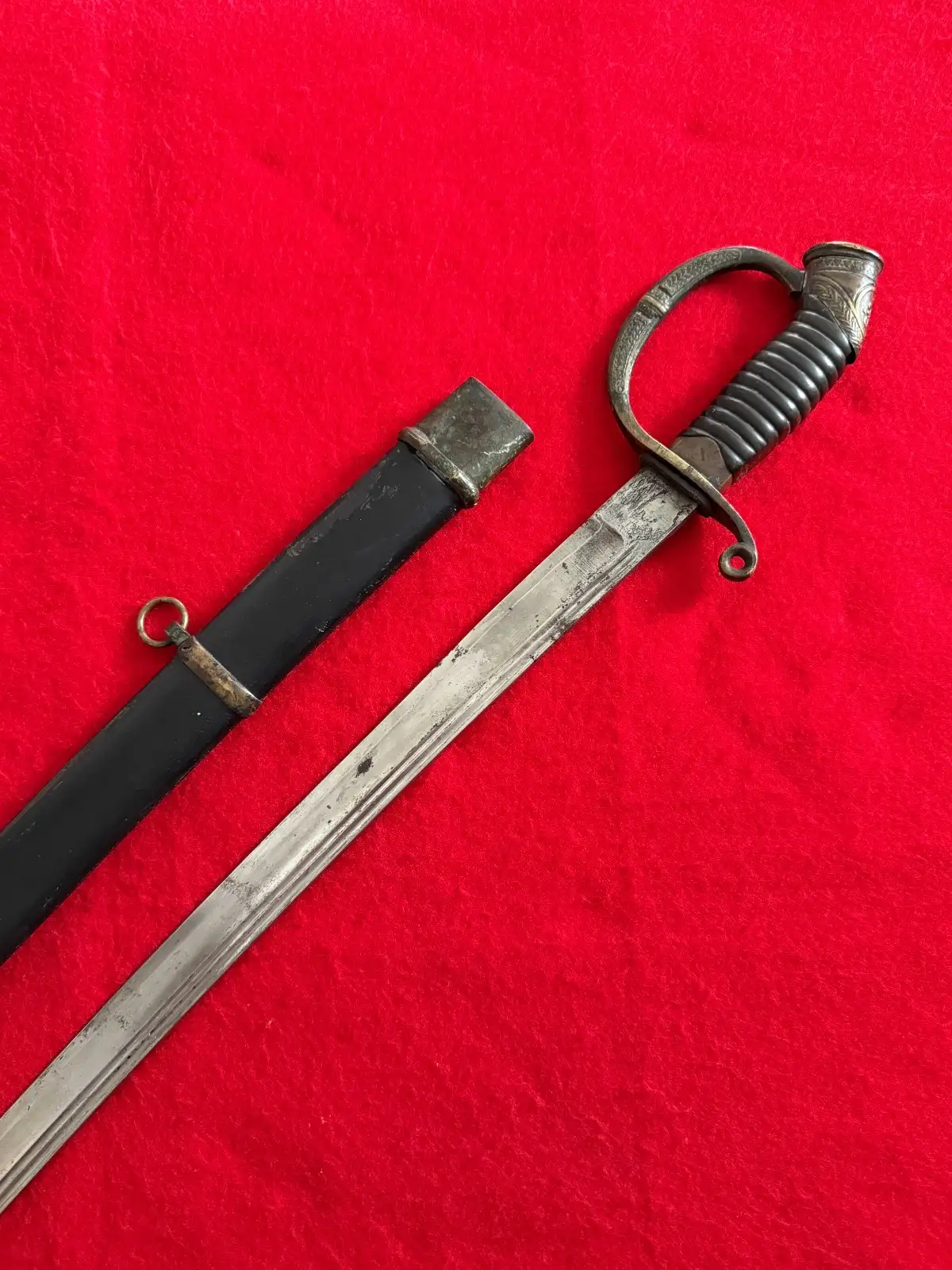
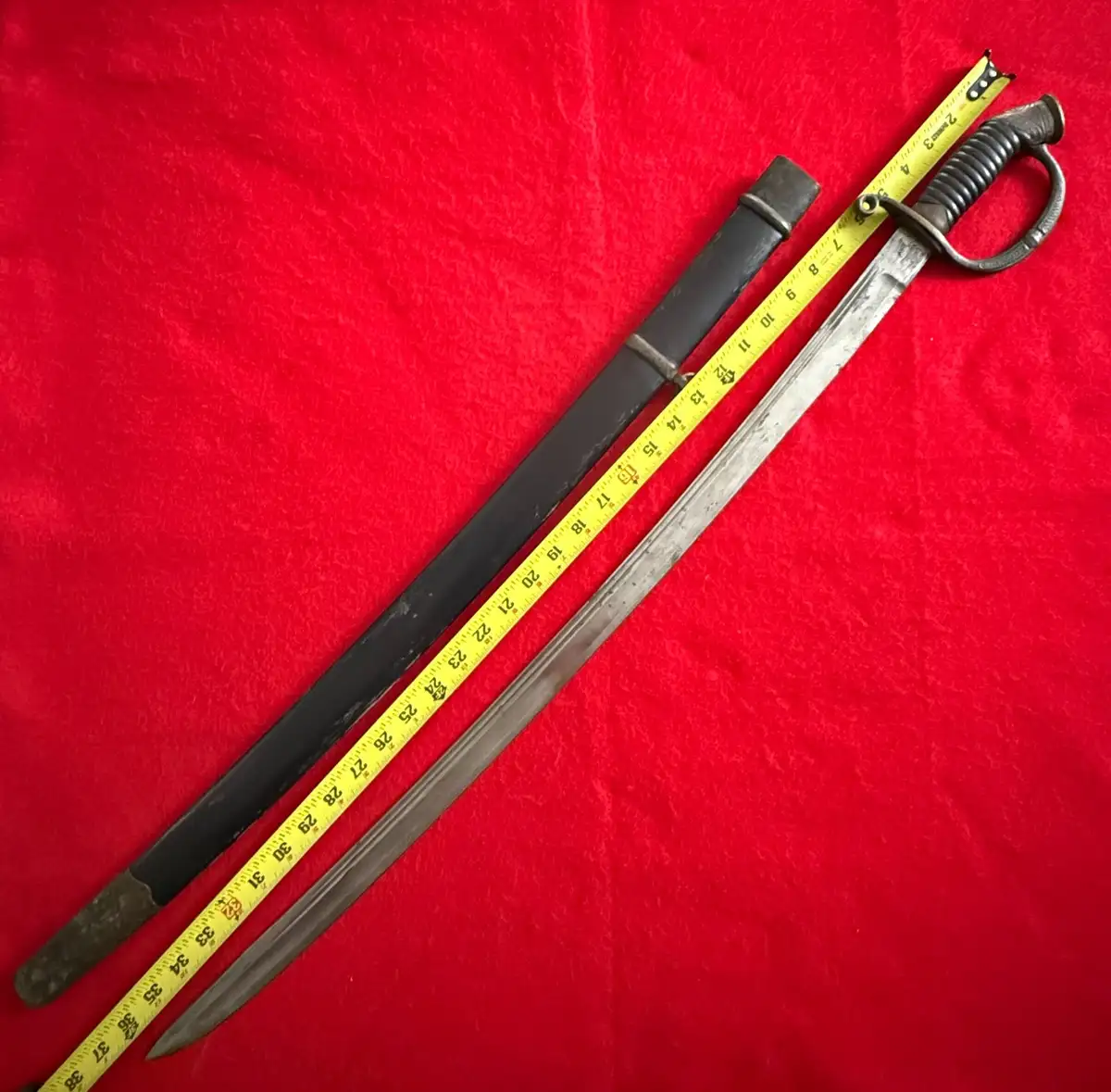
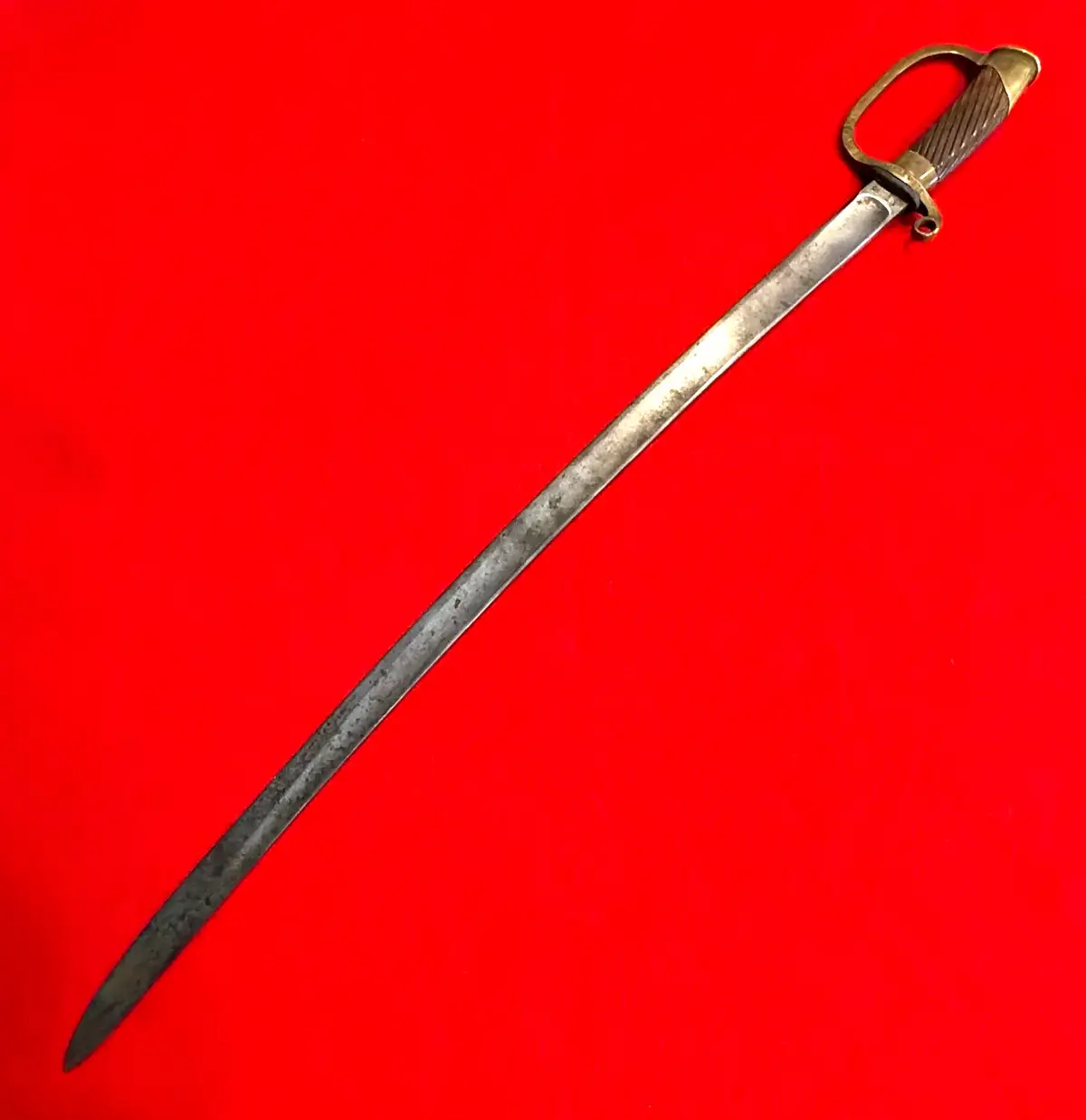
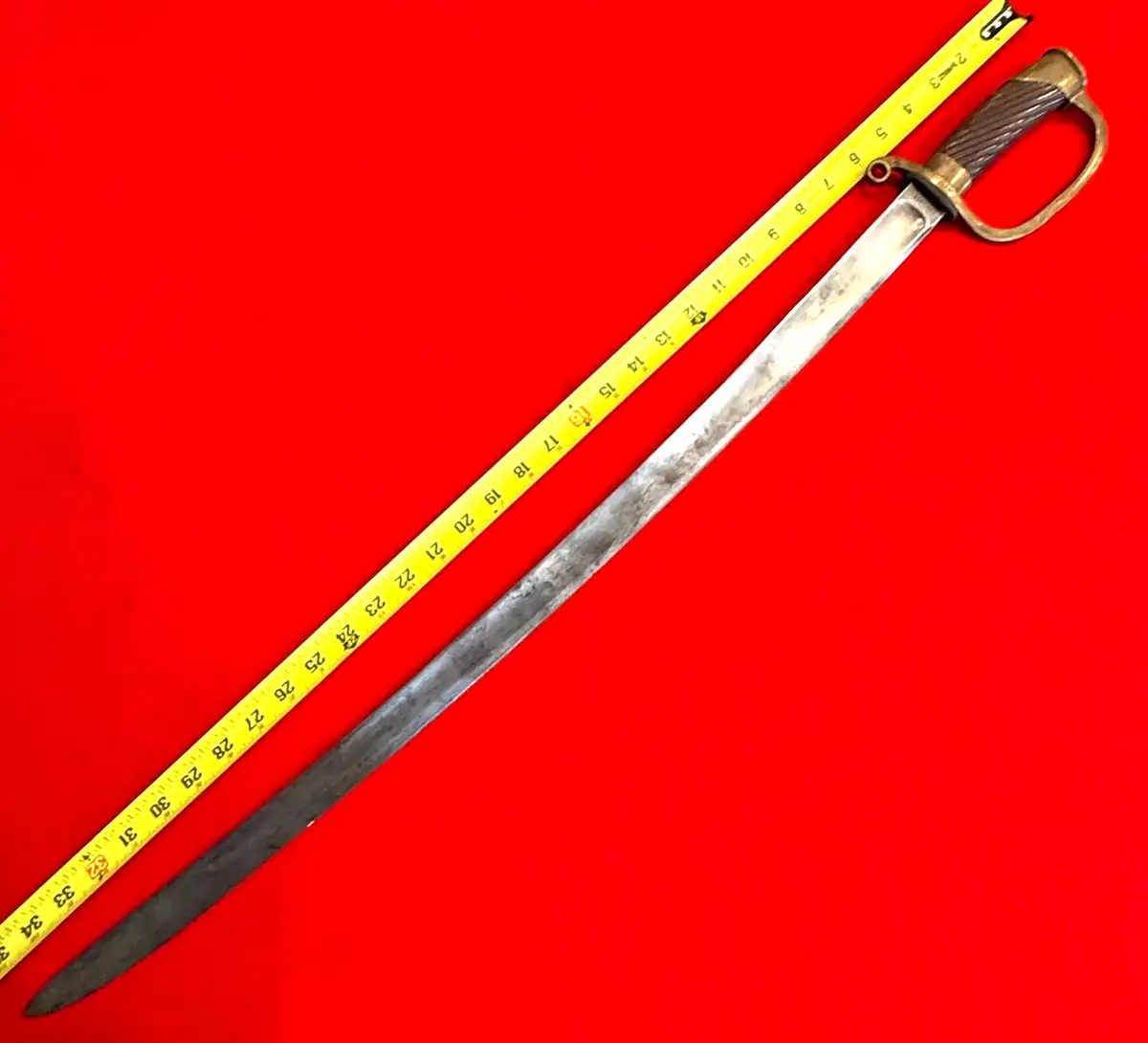
Zlatoust
A russian state arms works in the southern Urals, staffed at the outset by imported German masters, and the etched-and-gilded blade decoration its russian pupils turned into something separate.
Built to stop buying Solingen
Ironworks went up on the Ai River, below Mount Kosotur in the forested southern Urals, in 1754. The arms factory came sixty-one years later. Alexander I signed the decree establishing a factory for white arms and various steel and iron goods on 3/15 July 1815, and the works opened that December under Alexander von Eversmann, a Prussian metallurgist already employed in the district.
The problem it existed to solve was procurement. russia bought sword blades abroad, much of that trade running through Solingen, and a war with France had just demonstrated what such a dependence costs a state at the wrong moment. The first consignment of Zlatoust blades reached St Petersburg in the summer of 1816, regulation and decorated pieces together. A decree of 7 March 1817 directed that Zlatoust make edged weapons in place of the other arms works. Serial production began in 1821.
Zlatoust is a factory that acquired a town, not a town that acquired a factory. That order matters for everything that follows.
The men under contract
More than a hundred foreign specialists were brought in, drawn from Solingen, Remscheid and Klingenthal, alongside russian masters moved in from Tula and the Olonets works. The foreigners' contracts with the russian government set two obligations: organise production on the Solingen model, and train russians to do it without them.
Among them was Wilhelm Nikolaus Schaaf, a Solingen blade decorator, who arrived in 1815 with three sons. Ludwig worked in etching and gilding beside his father; Johann and Friedrich lacquered leather scabbards. The Schaafs took their first russian pupils in December 1817.
The training clause did what it was written to do. Within a few years the decoration shop was russian-staffed, and within a decade its best work no longer looked like Solingen's.
Bushuev picks up a brush
Ivan Bushuev entered as a pupil of the Schaafs in December 1817 and did not remain one. Sources disagree on his dates, giving either 1798–1835 or 1800–1834. He changed the working method: instead of scratching the drawing through a protective ground with a needle, he painted it directly onto the blade in cinnabar with a brush, so that the painted line itself resisted the acid. Repeated etching over a painted design yielded a range of tones rather than a single bitten line.
He also changed the subject. Where his teachers supplied repeating borders and trophies, Bushuev ran multi-figure battle scenes down the length of a blade, and put common soldiers rather than commanders at the centre of them. A winged horse recurs in his work often enough that he passed into local tradition as Ivanko-Krylatko, the winged Ivanko, a name fixed in general usage by Pavel Bazhov's tale of that title. The town's emblem is a winged horse.
From 1830 he led the making of a decorated set of plate armour known as Ancient Armour, for the heir to the throne. Around thirty craftsmen worked on it — smiths, polishers, carvers, engravers, gilders — and it was finished in October 1833 and sent to the capital in 1834 for Tsarevich Alexander Nikolaevich. He could not wear it. The armour stands about 151 cm and was built for a boy of ten or twelve; by 1834 he was fifteen. In 1928 the set was transferred from the Hermitage to the Zlatoust museum, and the sword and spear did not travel with it. The shield and sword are lost.
Ivan Boyarshinov (1804–1848) formed under Bushuev's influence but worked a different subject. He favoured hunting scenes in the Urals, on knives and daggers rather than sabres, and in his later work ornament increasingly took over the field from figures.
What Zlatoust engraving actually is
Call it engraving and you will look for the wrong thing. No graver cuts the picture.
The steel is polished, degreased and given a protective ground of bituminous varnish, hardened by heat. The drawing is laid in against that ground — a needle for fine work, a painted resist for broad. Acid is then let at everything the resist does not protect. The exposed ground turns matt; the protected drawing stays bright. The acid does not cut the image. It cuts around it.
Gold came next, and for the first decades it came by amalgam: gold dissolved in mercury, the paste squeezed through a suede pouch, spread onto metal heated until the mercury boiled away. What remained was gold fused into the steel, produced in a room full of mercury vapour. Anosov replaced the practice at the works with galvanic gilding.
The colours are oxide, not pigment. Controlled heat and chemistry drive the steel through grey, black, blue and violet. A background of this kind follows the polish marks of the metal underneath, because it is the metal.
One object passes through several pairs of hands — one draws, another etches, another gilds, another blues. That division is why Zlatoust work is consistent across decades and why an individual signature on a piece is worth reading closely.
Anosov and the crucible
Pavel Anosov came to Zlatoust in 1817, inspected the decorated-weapons section from 1819, managed the arms factory from 1824, and from 1831 to 1847 headed the Zlatoust mining district while directing the factory. He spent much of that time trying to reproduce the crucible steel of old eastern blades — bulat — by melting rather than by pattern-welding an imitation.
He organised crucible production at the works, ran long series of experimental melts, and had his first bulat blade made in 1837. His account, On Bulats, appeared in Gorny Zhurnal in 1841 and was issued separately the same year. He classified bulat patterns into five kinds by their figure.
In the 1840s he also moved the decorators onto household objects and flat decorative work. That single administrative decision is why the craft survived the eventual end of decorated sidearms: it had already been detached from the sword.
After 1917
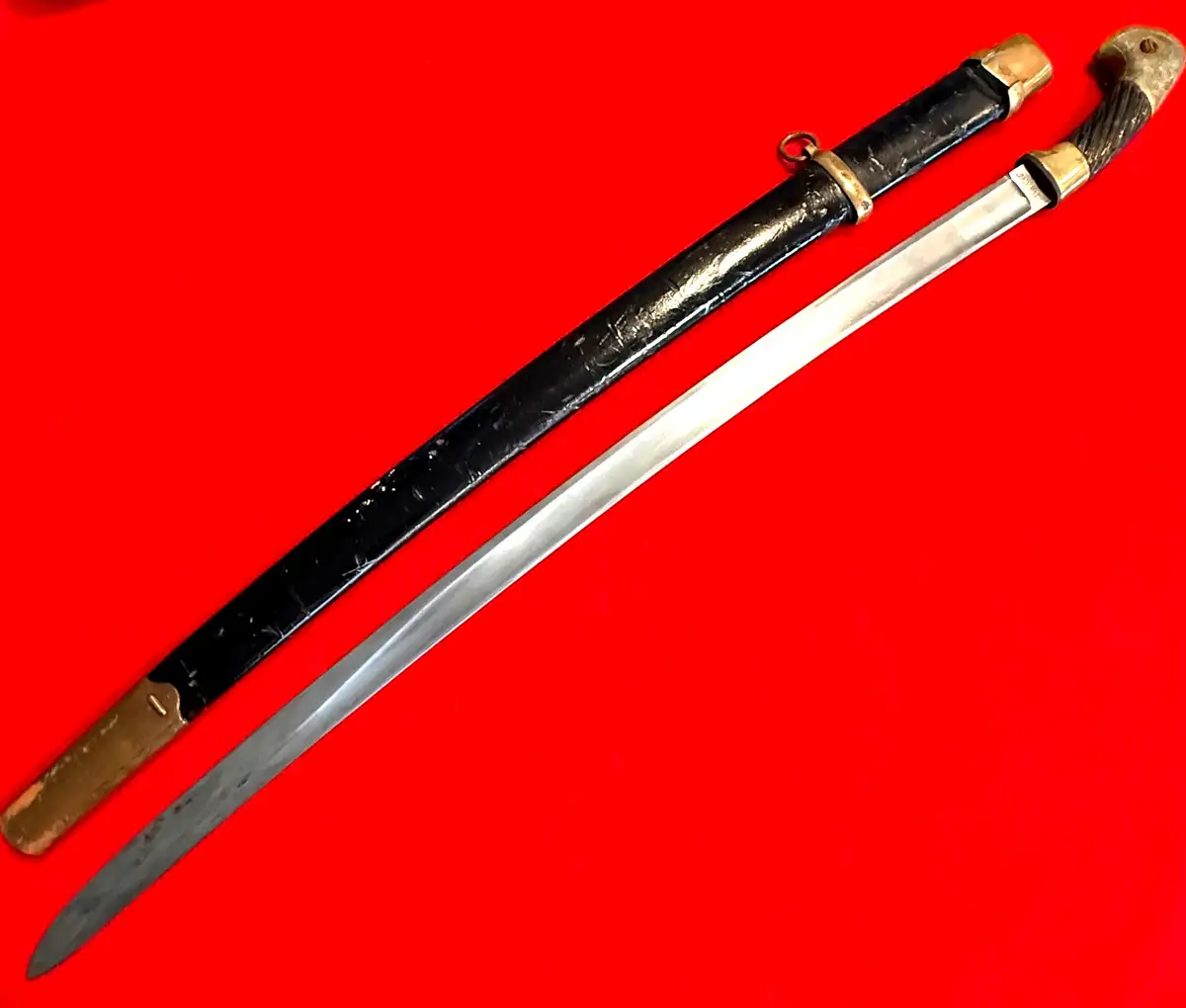
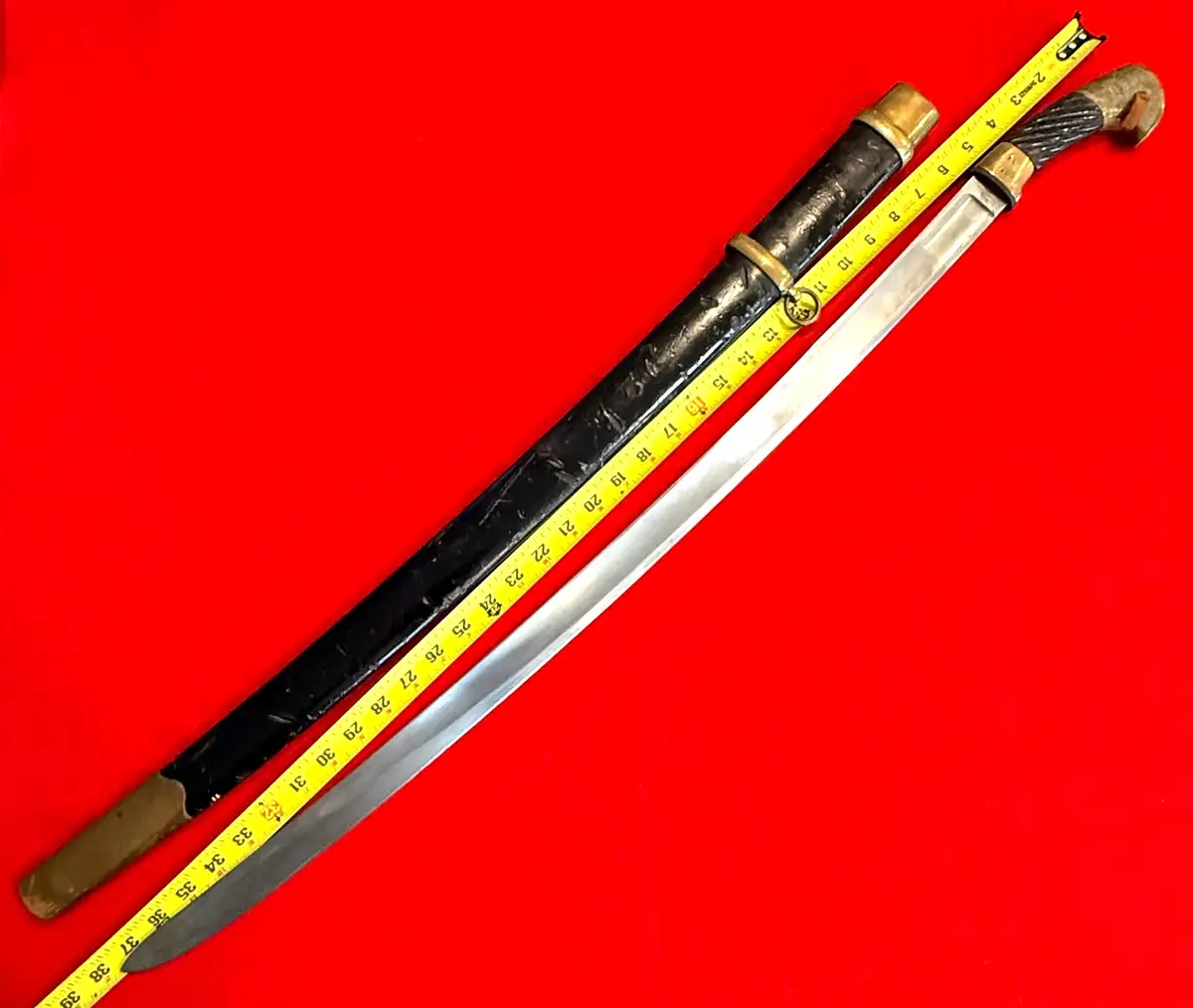
Regulation blade production continued through the Soviet decades. Zlatoust began making the pattern 1927 cavalry shashka in 1928 and produced it through the war years. By decree of 28 December 1931 the works was renamed the Zlatoust Instrument Plant-Combine named after V.I. Lenin, the source of the ЗиК mark found on Soviet-period blades. Edged-weapon manufacture ended in 1959, when the shop that made it was turned over to magnetic starters.
The decorated shop kept working, and its subjects changed. Through the 1920s and 1930s its output was largely domestic and commemorative — paper knives above all, along with decorative hatchets and table pieces. Ural landscapes, factory buildings with chimneys and tractors on ploughed fields replaced the older ornament, and in the 1930s the flat steel wall panel appeared as a form in its own right.
One caution for anyone reading a catalogue. The Zlatoust Machine-Building Plant, founded in 1939, is not the old arms factory. It was built for small arms, absorbed equipment and workers evacuated from Tula and Podolsk in November 1941, built the R-11FM submarine-launched ballistic missile designed by Korolev's OKB-1 from 1959, and later became the main production base for missiles of the Makeyev bureau. Two industries share one town name, and descriptions run them together.
The engraving school outlasted the empire that founded it, the German masters who taught it, and most of the objects it was invented to decorate.
What to look for
- The Imperial-period factory mark is a double-headed eagle inside a ring of Cyrillic lettering naming the works, stamped on the ricasso and accompanied by a date; separately, the forte of an Imperial shashka often carries an etched sovereign's cypher and eagle, which is decoration, not the factory mark.
- A four-digit year usually accompanies the ricasso mark, followed by the Cyrillic letter г, short for god, meaning year.
- Soviet military blades of the 1930s and 1940s carry the mark ЗиК with a full four-digit year — the initials of the Zlatoust Instrument Plant-Combine named after Lenin, the works' name from December 1931.
- Under a loupe an etched line has soft shoulders and no raised burr; a burin-cut line has a V-section and a burr the polisher had to remove, so a burr tells you the decoration is not Zlatoust-method work.
- Blue, black and violet grounds are oxide rather than paint — under magnification they run over the polishing scratches in the steel instead of filling them.
- On Soviet decorative pieces of the 1920s and 1930s the usual subjects are Ural landscapes, factory buildings and tractors, and the objects themselves are mostly paper knives, small hatchets and table pieces rather than weapons.