Ames Manufacturing Company
Known in the trade as Ames.
How a Massachusetts cutlery shop became the United States government's principal sword contractor, and then cast the bronze doors of the Senate wing of the Capitol.
The 1832 contracts
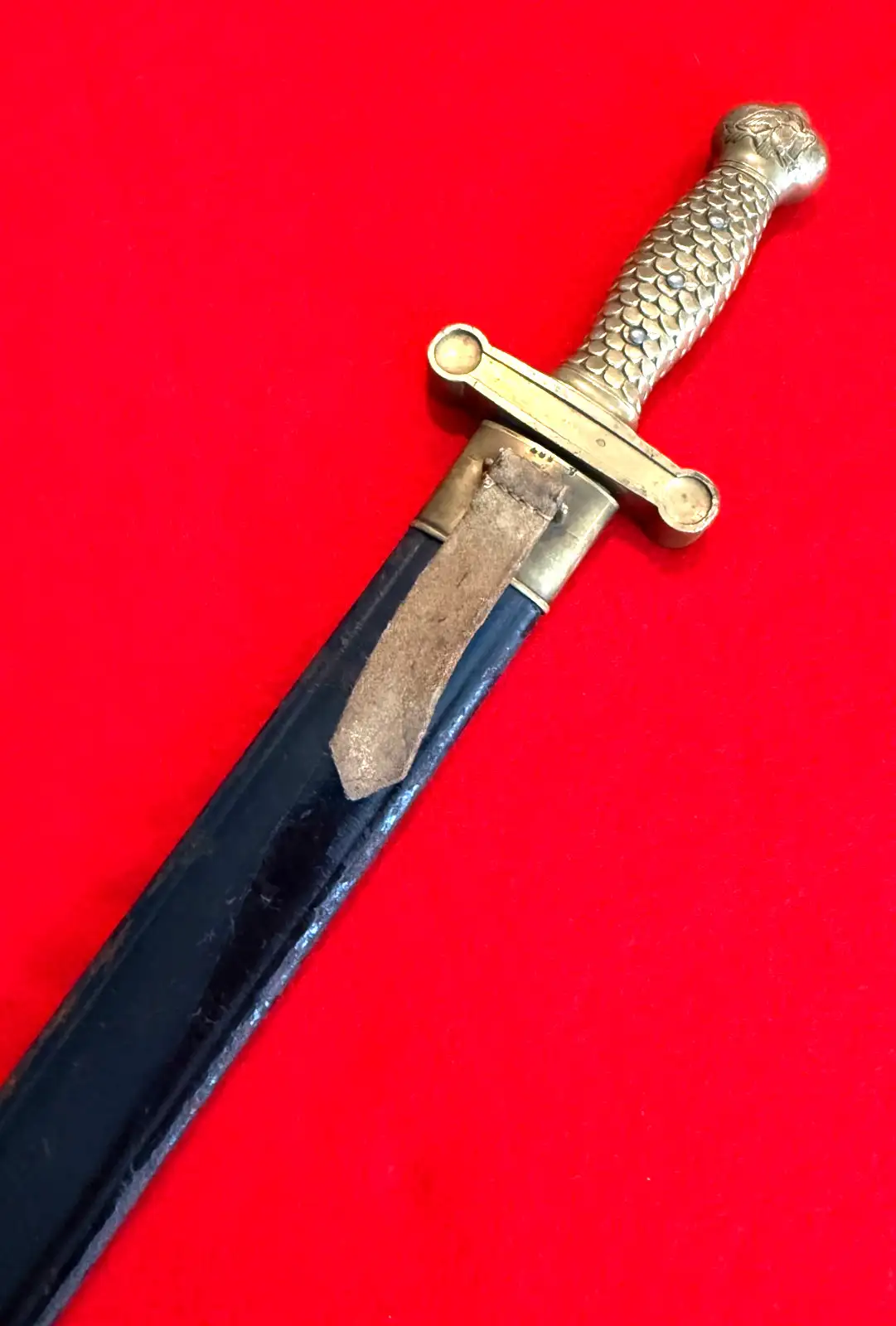
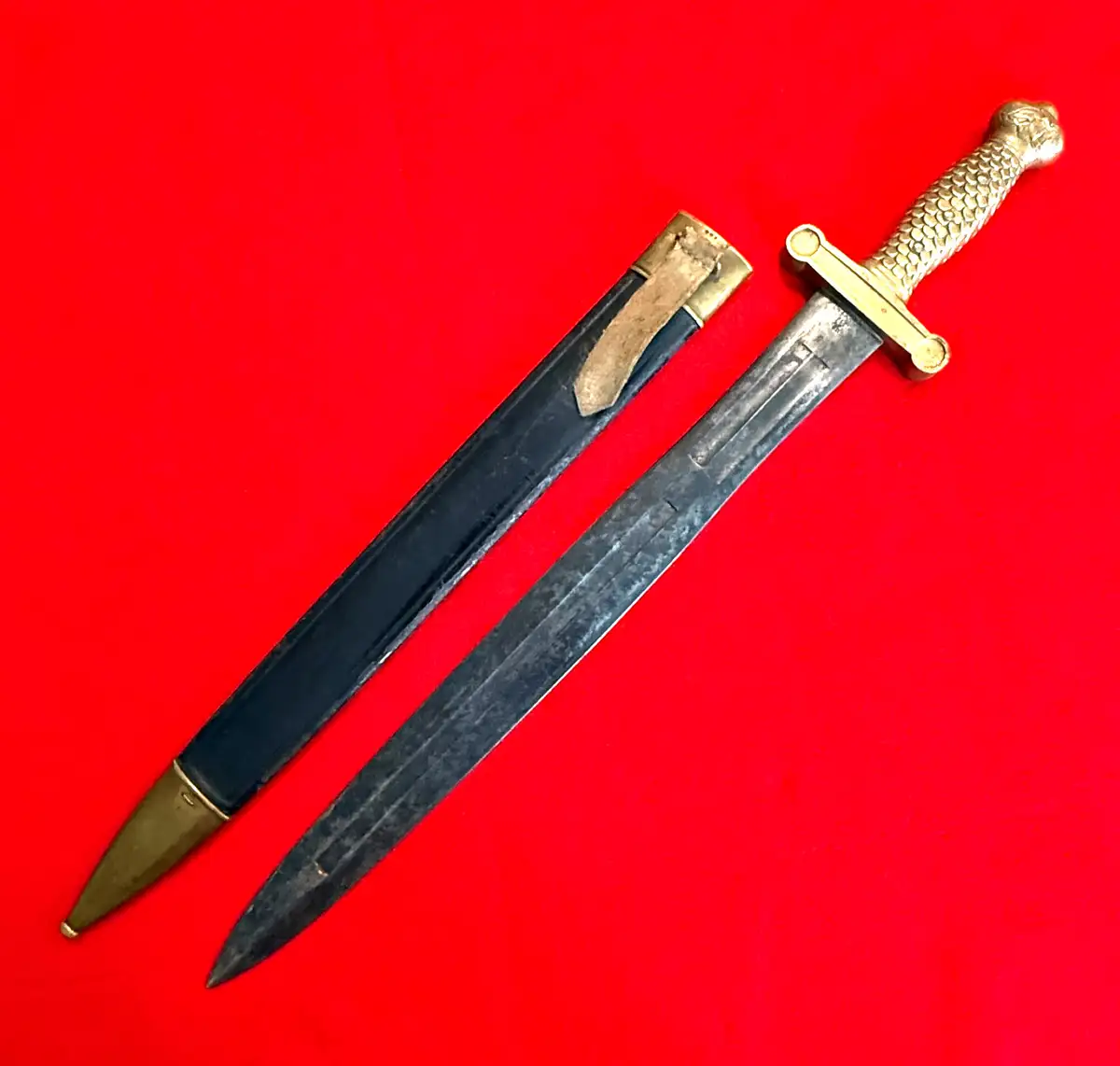
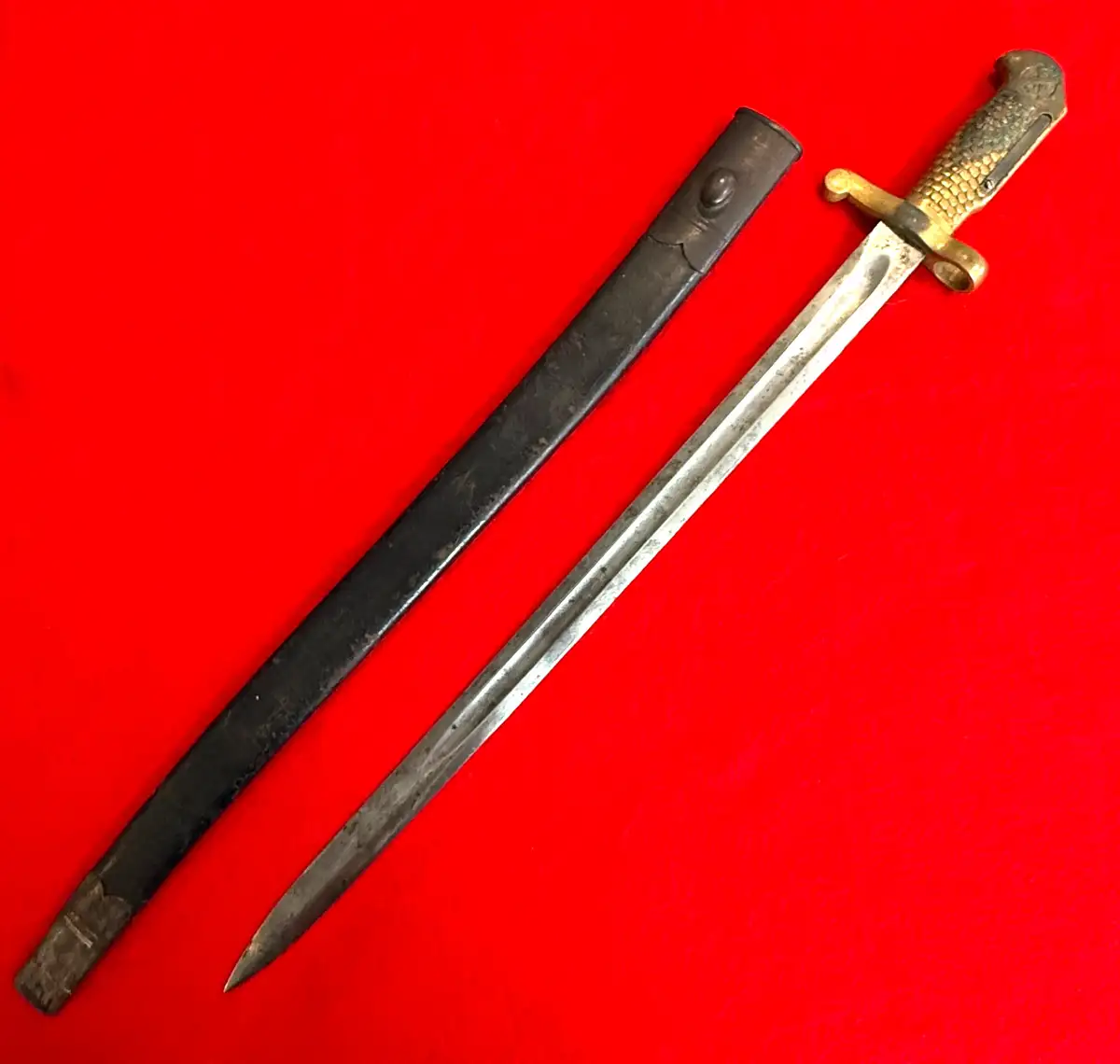
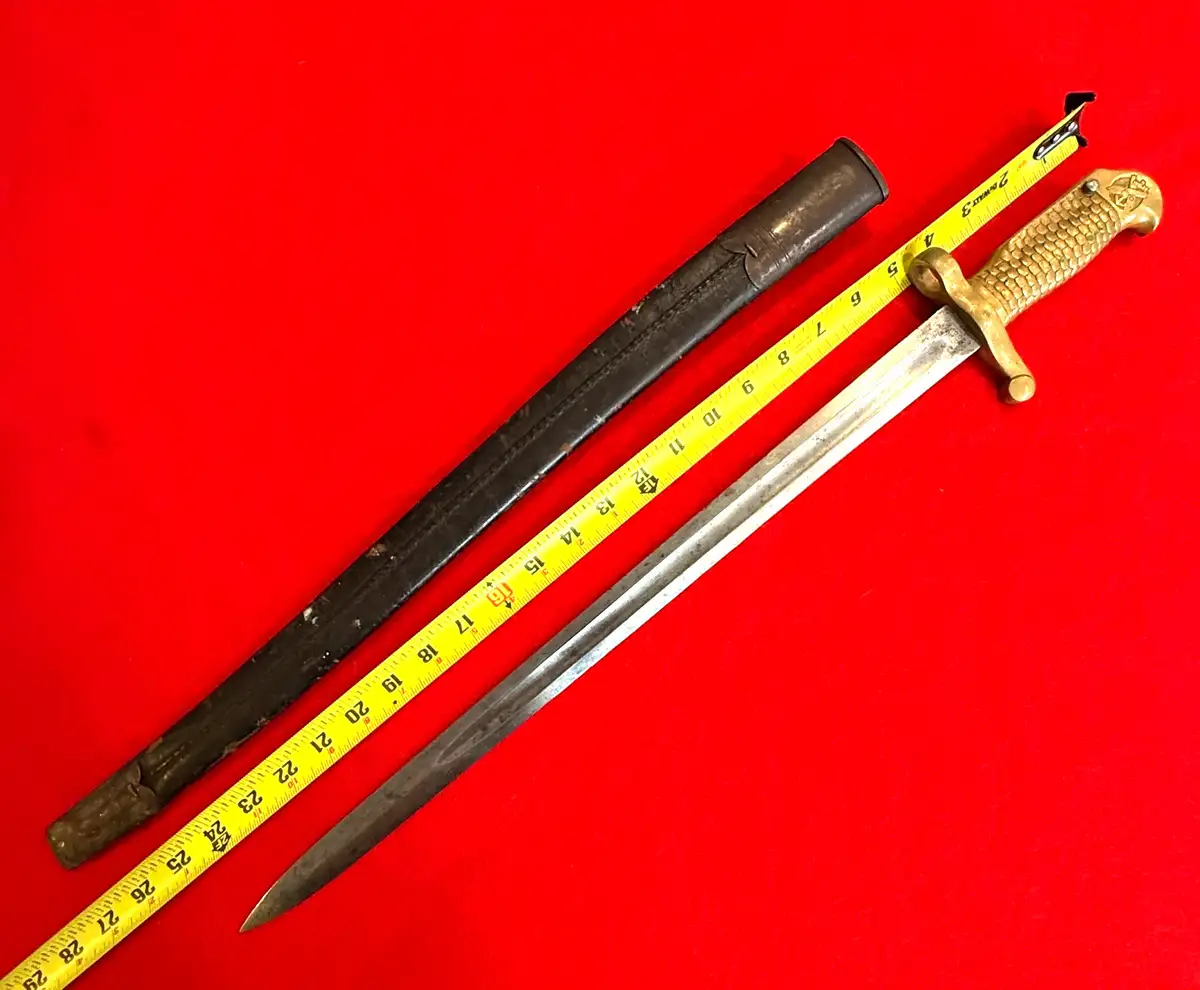
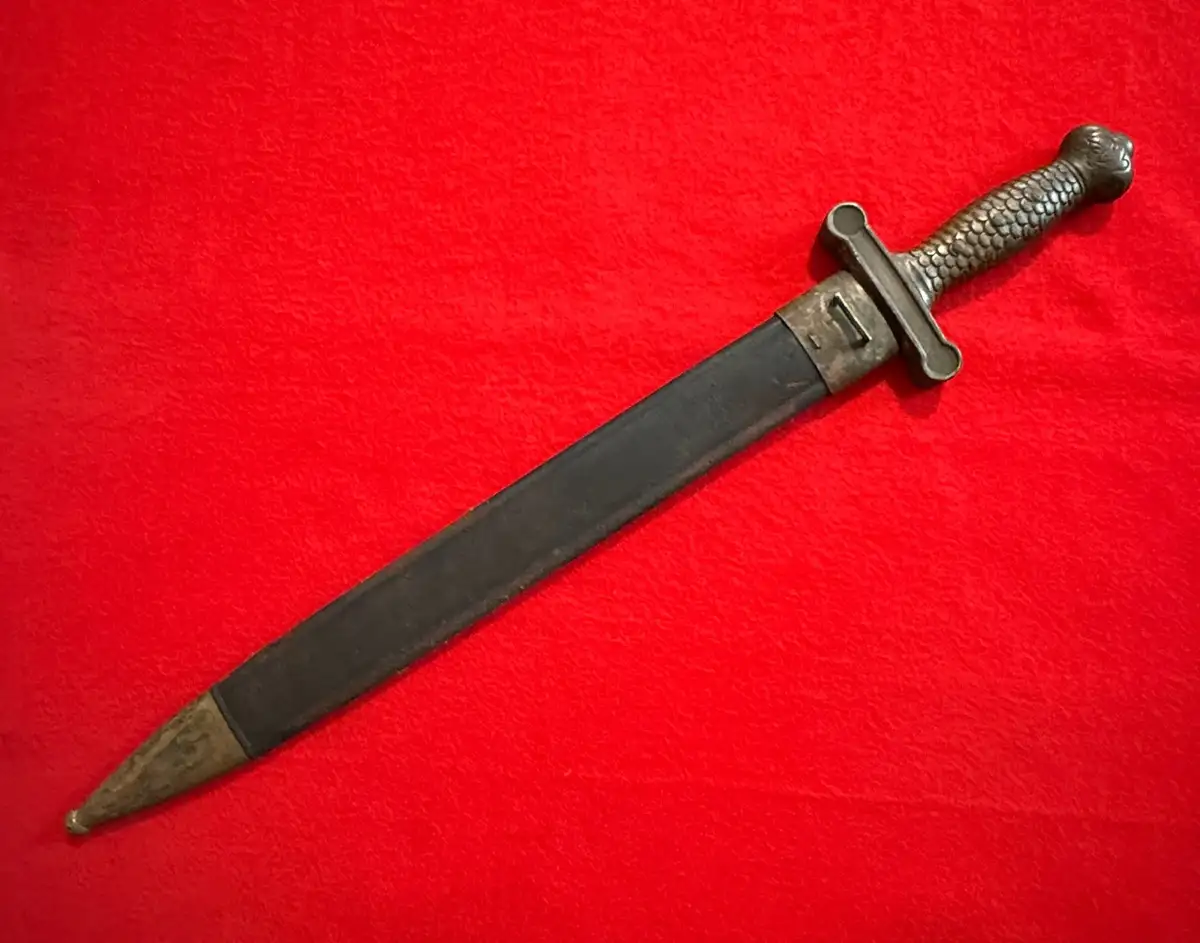
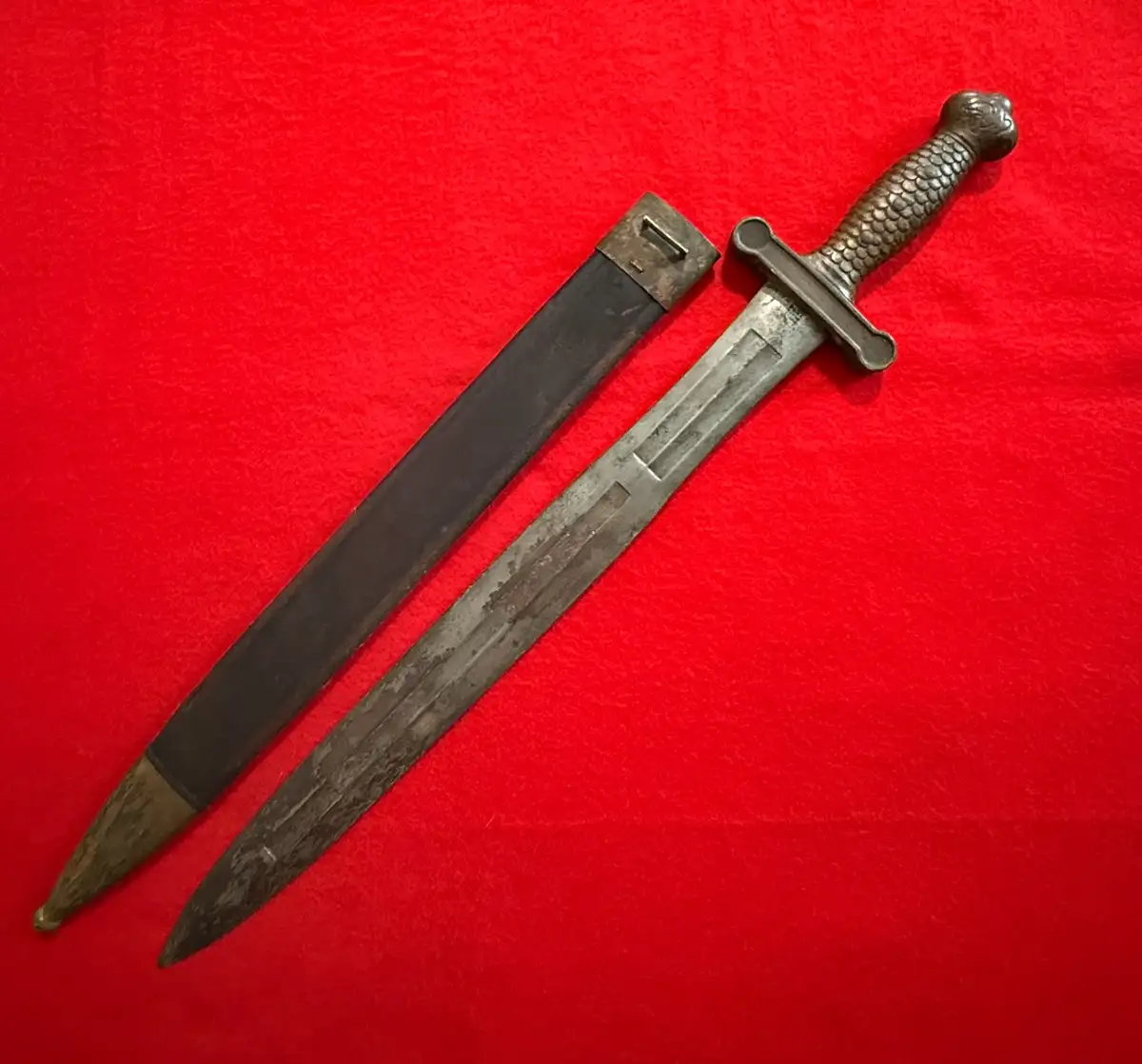
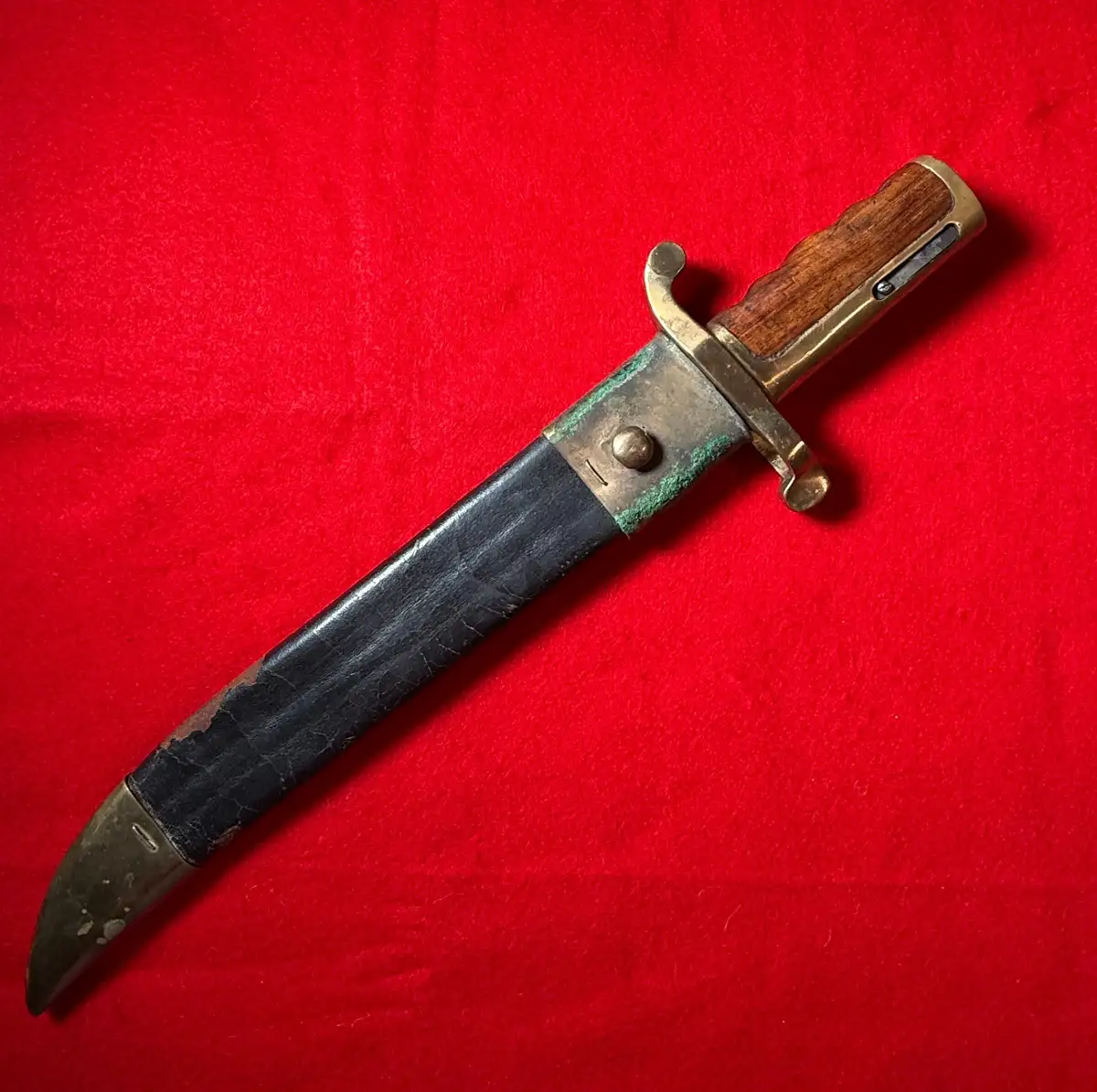
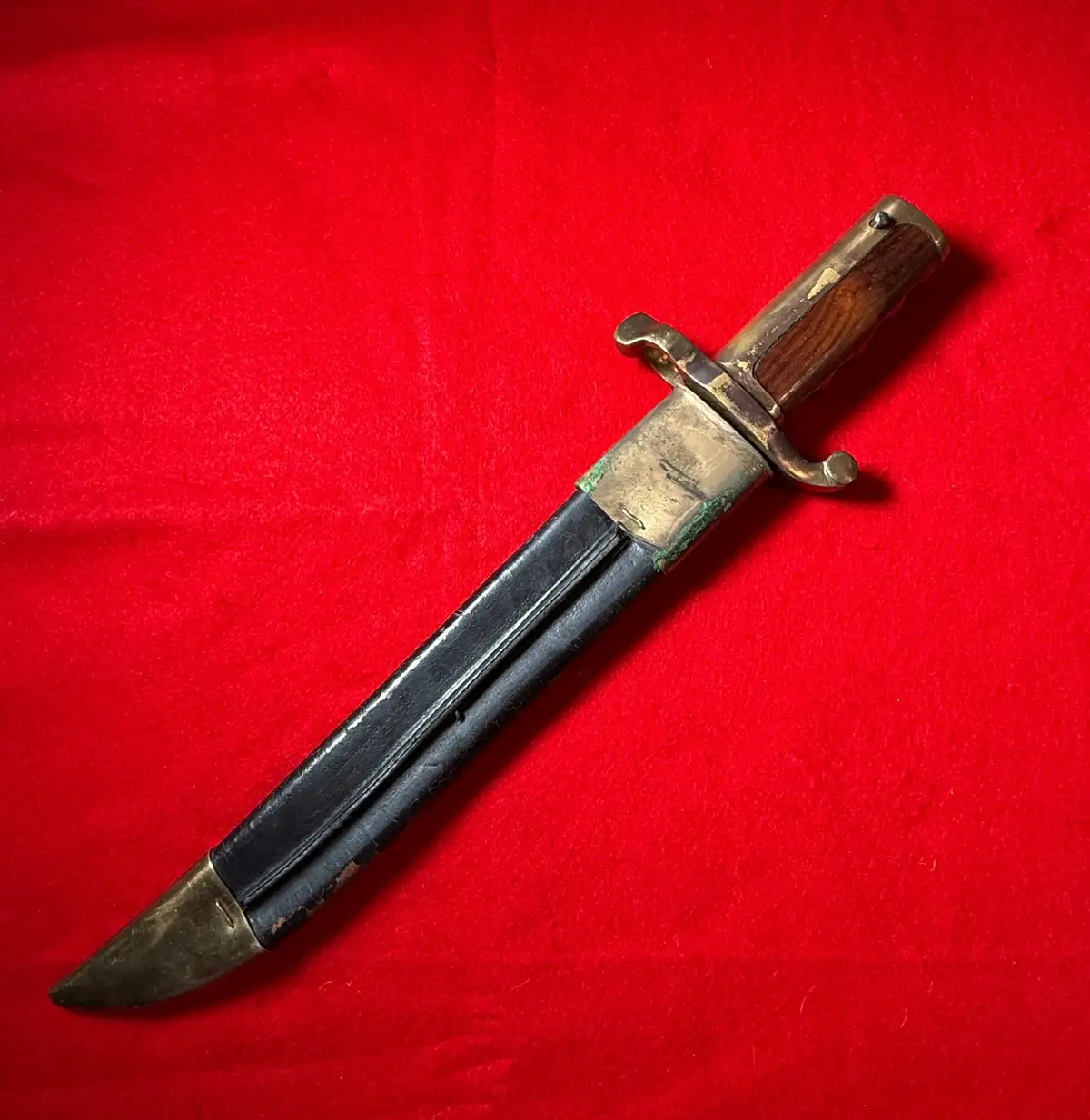
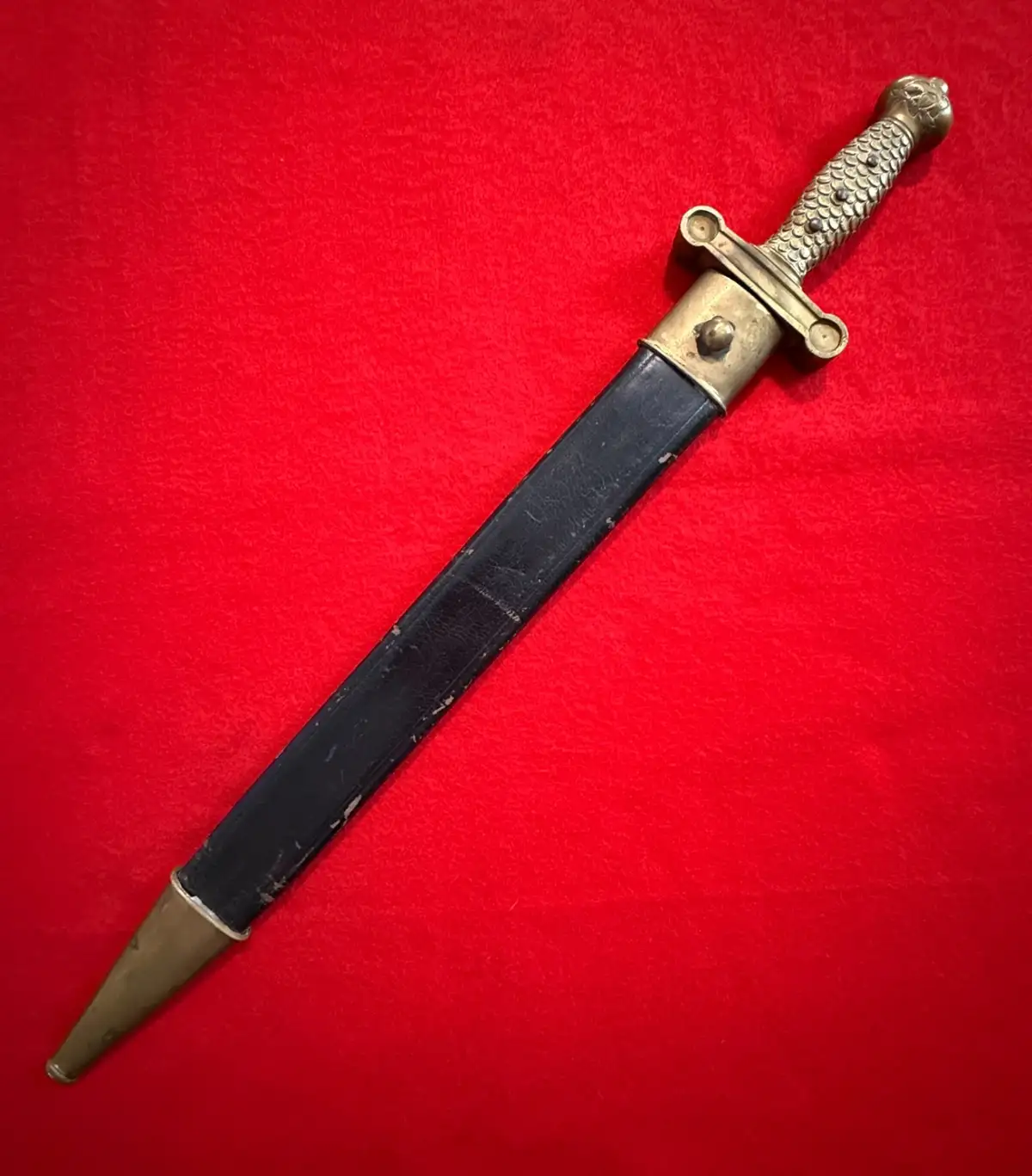
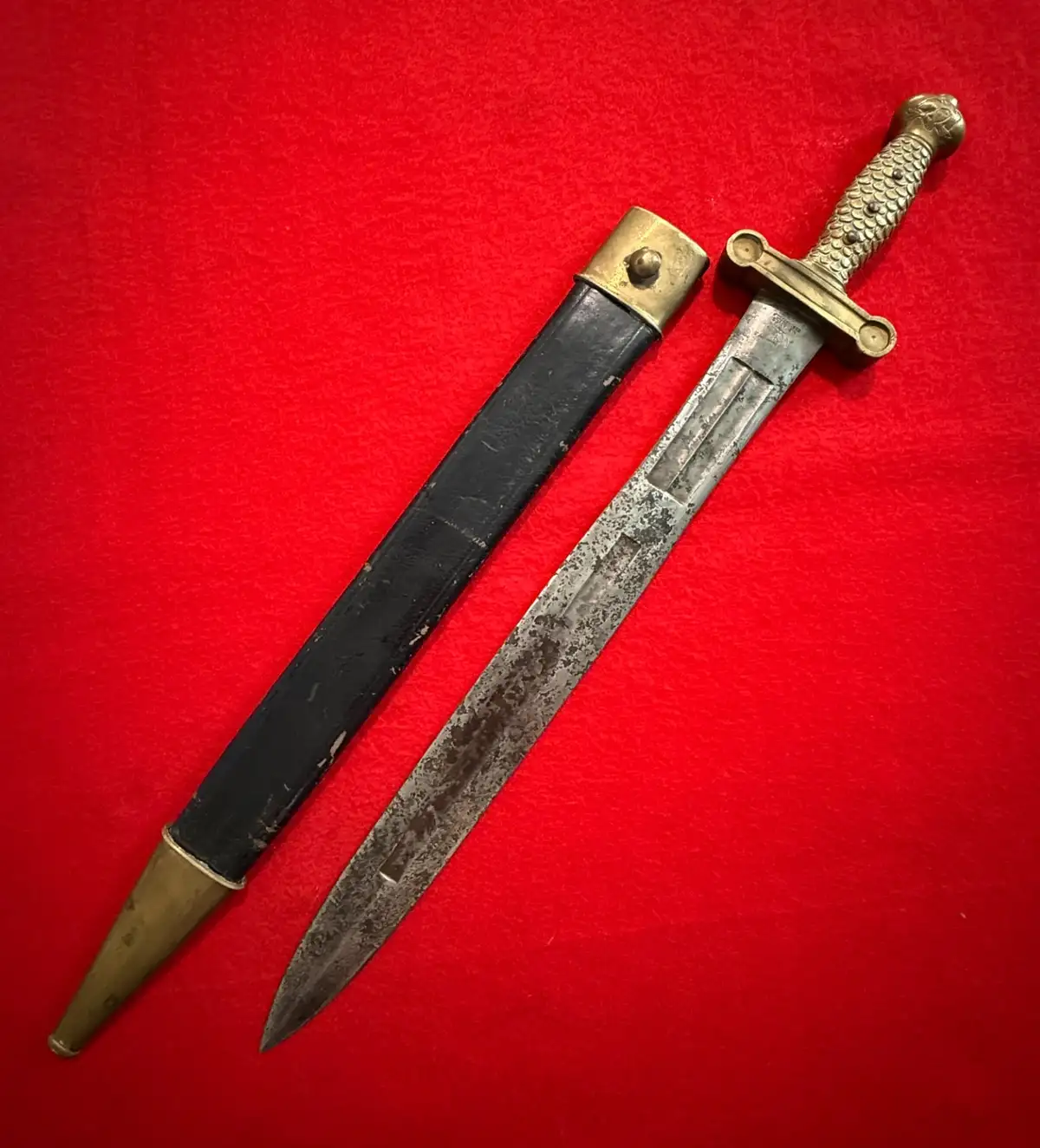
On 5 June 1832 the Ordnance Department contracted with Nathan P. Ames Jr. for 2,000 short swords: 600 to be delivered by December that year, the remaining 1,400 by March 1833. A second contract for another 2,000 followed on 21 February 1833, with 1,100 due by July and 900 by March 1834. The pattern was the Model 1832 foot artillery sword — a straight, double-edged blade of about nineteen inches in a brass hilt, copied from the French Modele 1816 glaive d'artillerie a pied, which the French themselves had modelled on the Roman gladius.
Ames did not make all of it. Ames supplied the blades and assembled the swords. Samuel Huse, who kept a foundry at Newburyport, cast the brass hilts. Robert Dingee made the scabbards, belts and frogs. That division of labour is the honest picture of American sword-making in 1832: no single works could do the whole job. Huse's hilts gave trouble and were rejected in numbers, and Ames moved brass casting in-house across 1833 and 1834, though Huse stock appears to have gone into deliveries into early 1834.
Nor was Ames first. The pattern the Model 1832 replaced had come from Nathan Starr of Middletown, Connecticut, whose family supplied the government's swords through the 1820s. What Ames became was something Starr never was: a works that held Army and Navy contracts for four decades while making a great deal else besides.
The last Ames contract for the Model 1832 was completed in 1862, and the sword stayed in service until 1872. About 16,200 of the pattern were built, not all of them by Ames. Roughly thirty years in production and forty in service, for a design that was already a copy of a copy.
Cabotville
Nathan Jr., born in 1803, and his brother James Tyler Ames, born in 1810, moved the family cutlery business from Chelmsford to Chicopee Falls in 1829 at the invitation of the textile capitalist Edmund Dwight, who gave them a blacksmith shop at his mill complex rent-free for four years. They began with nine hands. In 1834 they incorporated as the Ames Manufacturing Company, and the following year moved to a better-powered site downstream at Cabotville, a mill village on the Chicopee River.
Brass and bronze founding began at the works in 1835; a separate iron foundry followed in 1845. From then the hilt, the blade and the scabbard came from one address, which is why the place name stamped on the ricasso carries so much weight.
Cabotville was not a town. On 29 April 1848 the town of Chicopee was set off from Springfield, taking Cabotville with it, and the mark on the blades followed the map. Nathan Jr. died on 3 April 1847; James took the company and ran it until January 1872, when Emerson Gaylord succeeded him as president. James died in 1883.
Ames made firearms too, for a while. About 4,250 Jenks breech-loading percussion carbines went to the Navy between 1843 and 1846, along with the Model 1842 boxlock Navy pistol, a pattern Henry Derringer of Philadelphia also supplied. E. Remington & Sons then bought the gun-making machinery and the balance of the Jenks contract and moved it to New York State. Ames kept the edged weapons, the machine shop and the foundry.
The patterns
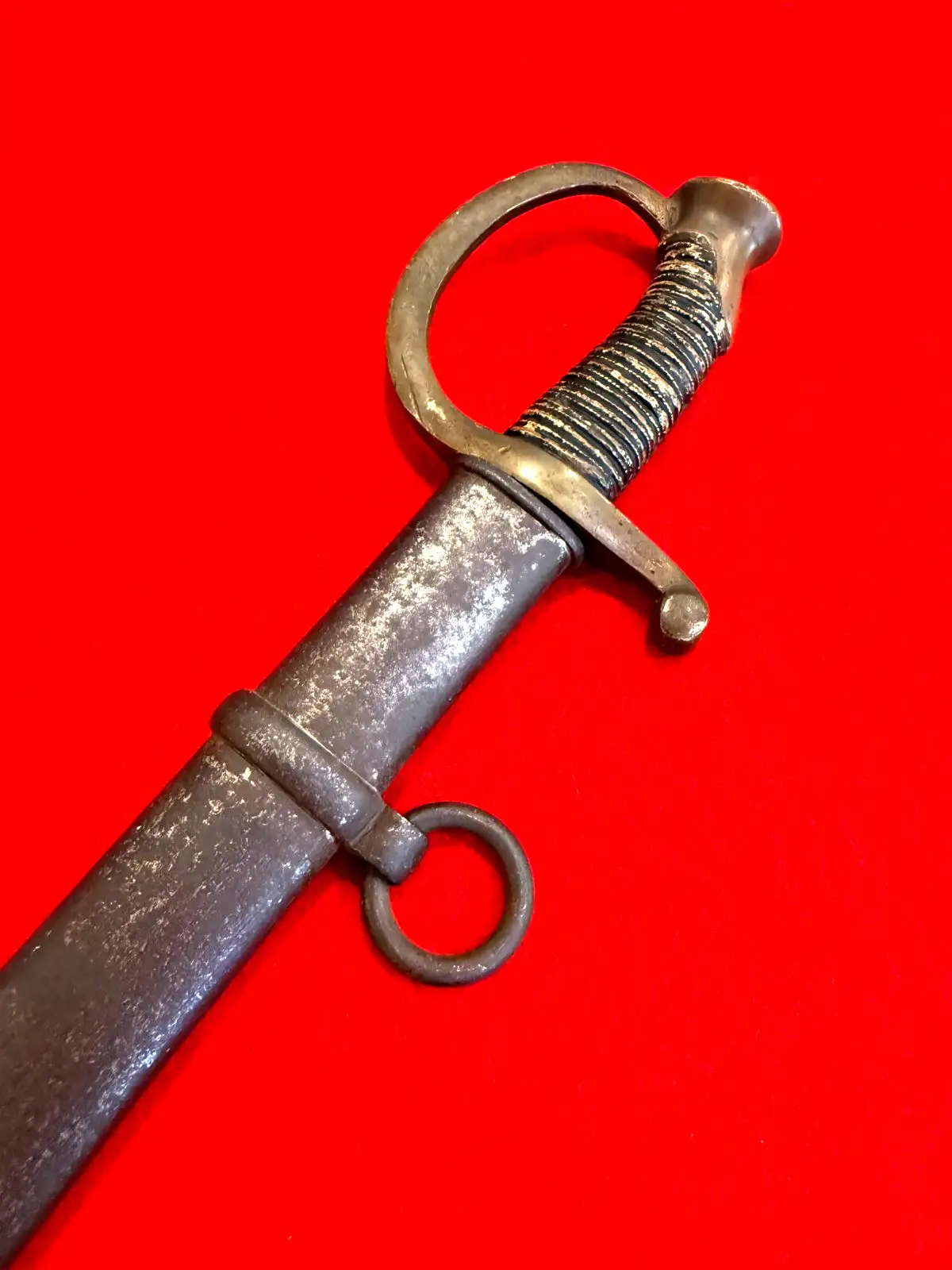
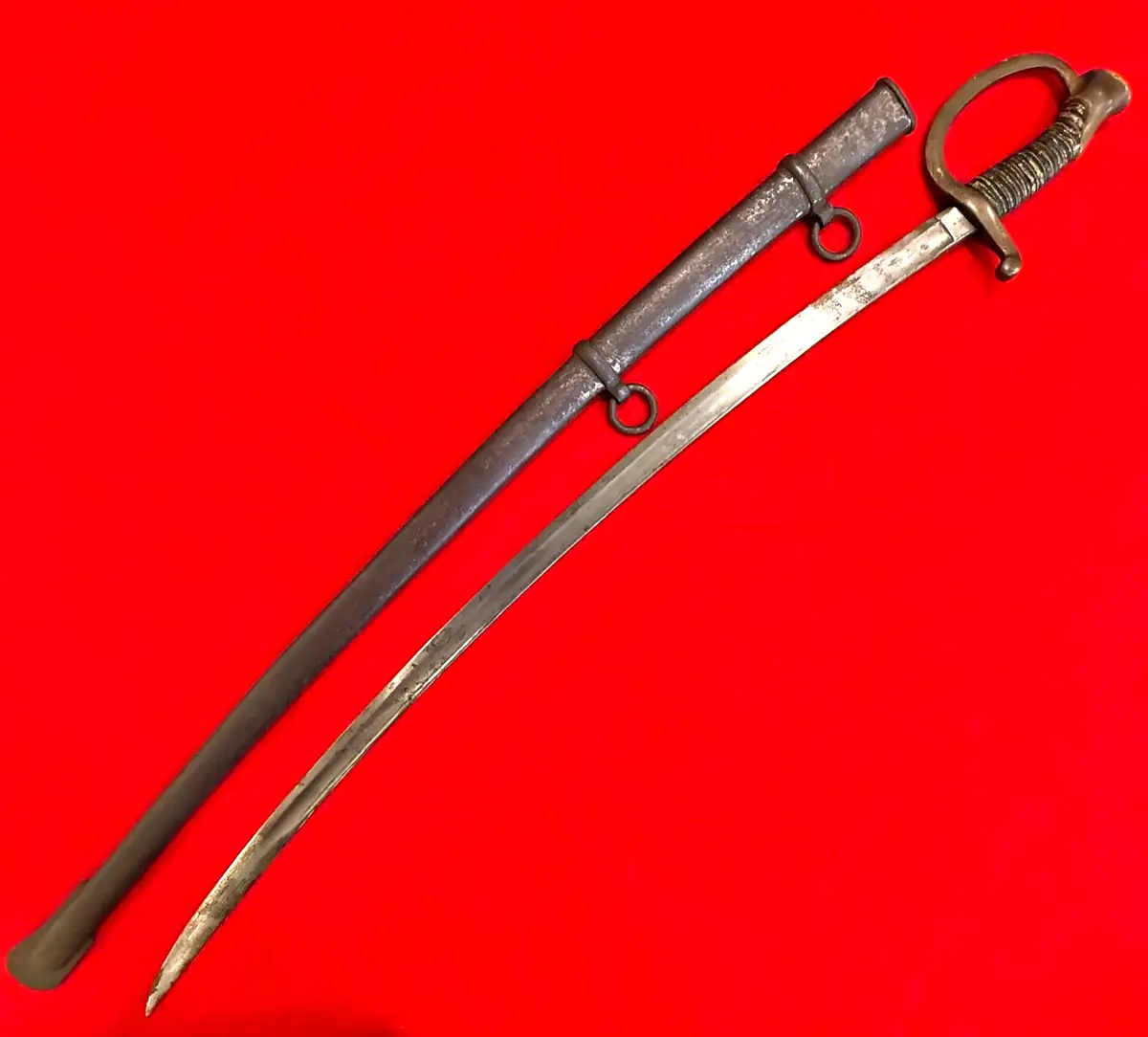
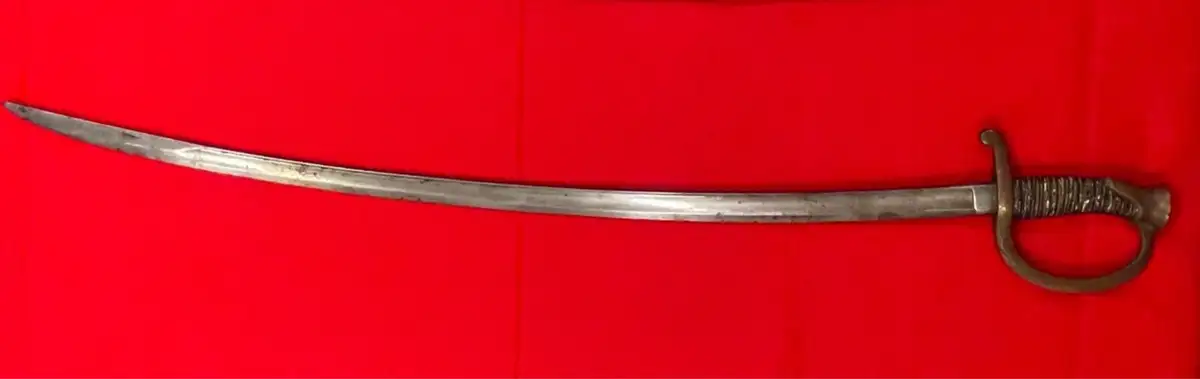
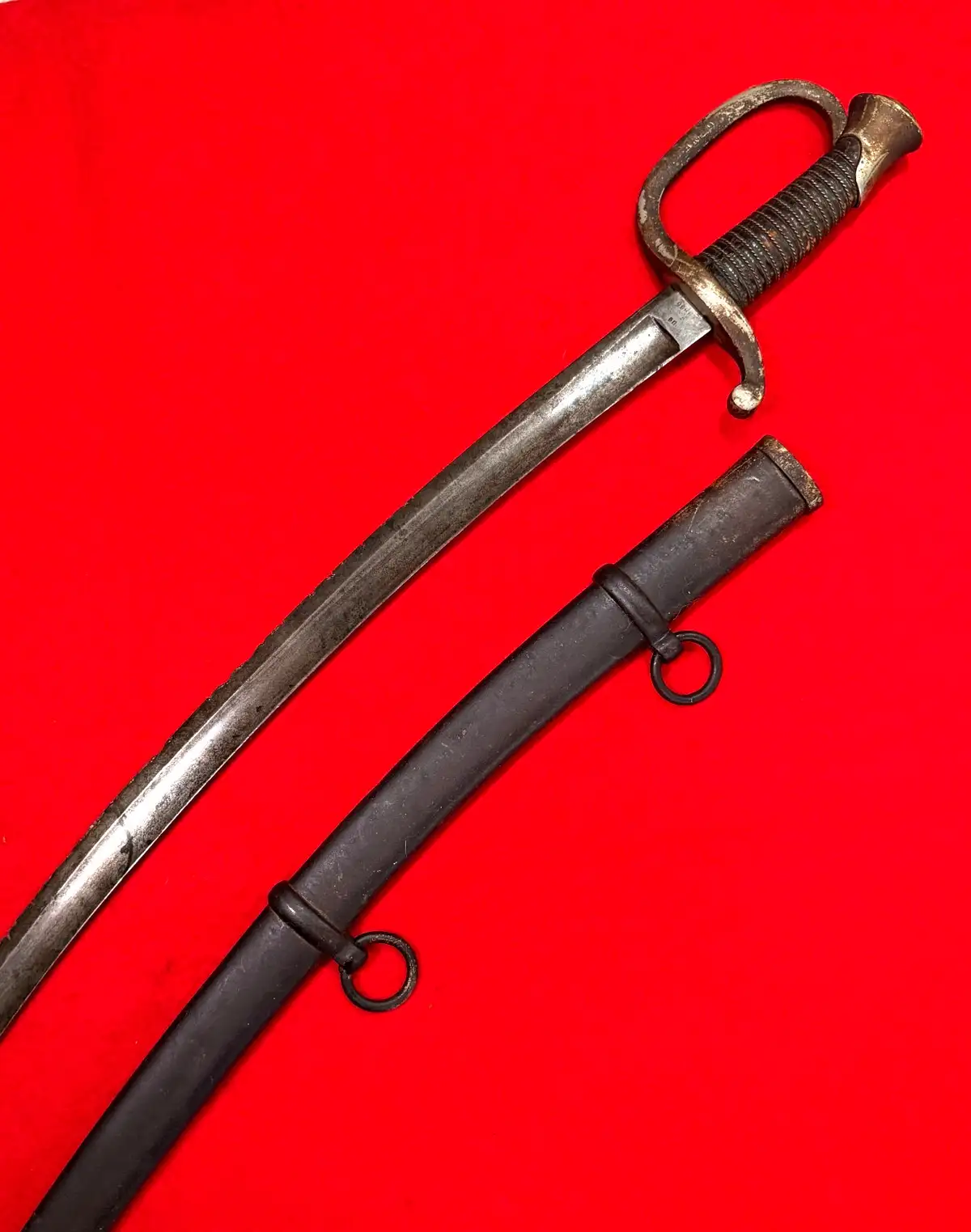
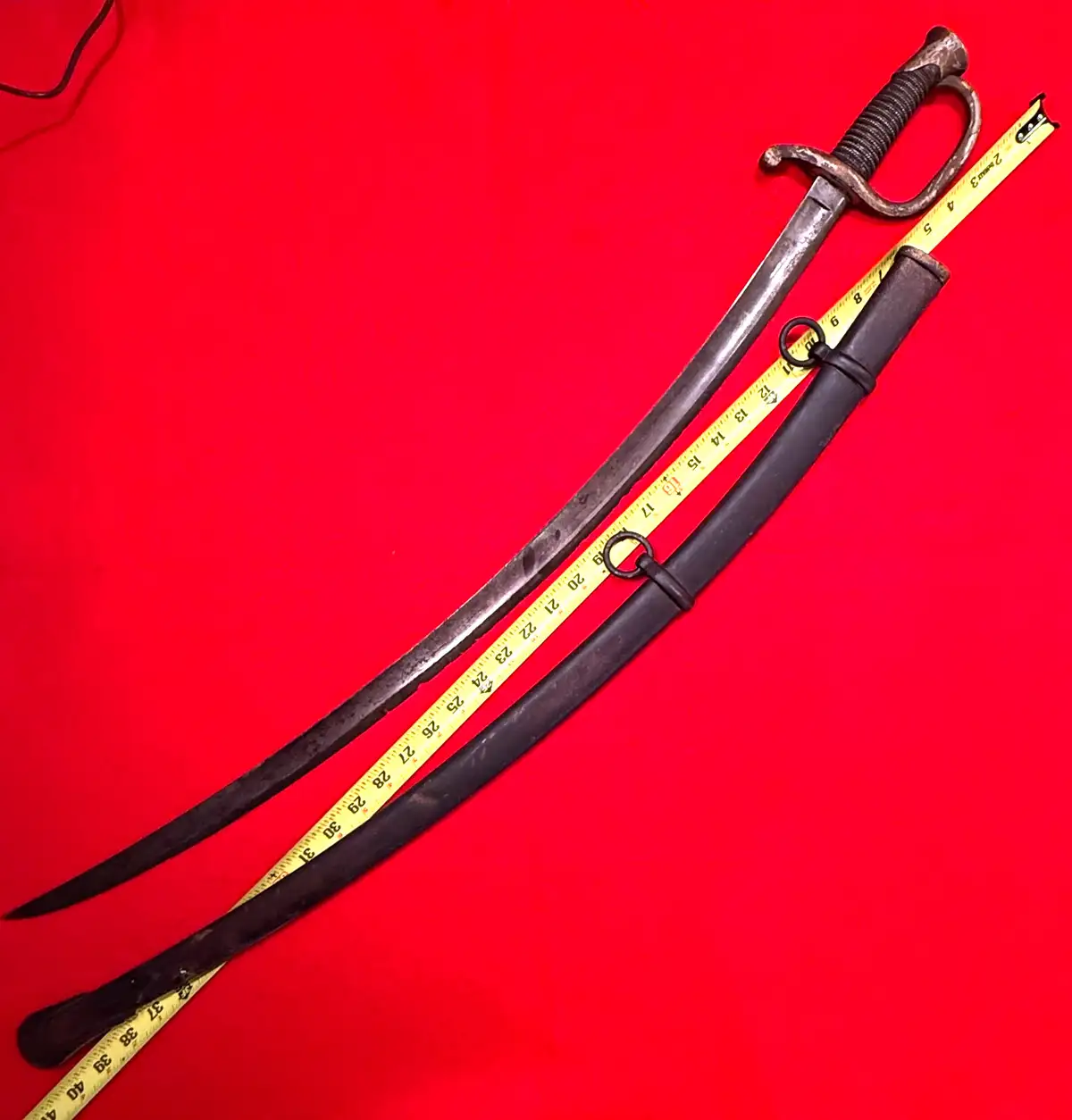
Set out the regulation patterns Ames supplied and you have most of the nineteenth-century American soldier's and sailor's cutlery: the Model 1832 foot artillery sword, the Model 1840 heavy cavalry sabre, the Model 1840 non-commissioned officer's and musician's swords, the Model 1850 foot officer's and staff and field officer's swords, the Model 1852 naval officer's sword, the Model 1860 light cavalry sabre, and the Model 1860 naval cutlass — 22,000 of the last for the Navy and 300 for the Army.
This is the American counterweight to the German story. The service also bought imported swords, many of them made at Solingen, through importing houses such as W. H. Horstmann & Sons of Philadelphia, who both imported the Model 1832 and, rarely, made it. Ames is the name on the other side of that trade: the domestic works that made the same patterns on the same contracts, in Massachusetts.
Ames also built presentation swords — the inscribed, gilt-mounted pieces voted by states and cities to generals. The Smithsonian's National Museum of American History holds one inscribed "Presented by the People of the State of Louisiana to Gen. Winfield Scott".
Bronze
The foundry at Chicopee cast bronze cannon and bells, and it was run by Silas Mosman. By the early 1850s it was taking fine-art work: the Metropolitan Museum of Art calls Ames the first foundry in the United States to gain proficiency in bronze casting.
Henry Kirke Brown's DeWitt Clinton, for Green-Wood Cemetery in Brooklyn, was cast at Chicopee about 1852. So was Brown's equestrian George Washington, dedicated in New York on 4 July 1856 and standing today in Union Square, and Richard Saltonstall Greenough's Benjamin Franklin, dedicated outside Boston's Old City Hall that September. Thomas Crawford modelled the bronze doors for the Senate wing of the Capitol in Rome between 1855 and 1857, died before finishing them, and William Rinehart completed the models; they were shipped to America in 1864, cast by James T. Ames at Chicopee between 1864 and 1868, and hung late in 1868. Daniel Chester French's Minute Man was cast at Chicopee from melted-down Civil War cannon and unveiled at the Old North Bridge in Concord on 19 April 1875, the centenary of the fight.
Silas Mosman's son Melzar joined the works in 1860 drawing presentation-sword designs, enlisted in 1862, returned to the foundry after mustering out in 1864, and left in 1884 to found the Chicopee Bronze Works. The man who drew sword hilts and the man who cast Crawford's doors worked in the same yard.
The machinery trade
By 1848, 220 of the roughly 300 people at Chicopee were making cotton-processing machinery, not weapons. Swords were the reputation; machine-building was the business.
Ames built machine tools for other people's armouries. The British commission that came to study American manufacturing practice in 1853 asked James T. Ames to build a set of gun-stock machinery, on Thomas Blanchard's principle, for the Royal Small Arms Factory at Enfield; Ames machines were installed there in 1857. The London Armoury Company worked on Ames machinery, and the russian and Spanish governments ordered gun-making machines from Chicopee. One estimate puts about half a million Enfields made on Ames machinery between August 1858 and the outbreak of the American Civil War. American interchangeable-parts practice travelled out of Chicopee in crates.
James T. Ames sold where there were buyers. In the years before secession that included Southern states arming themselves — swords, cannon and accoutrements went south on ordinary commercial terms, and the Alabama Volunteer Corps, formed in February 1860, was armed by Ames. The firm then spent the war supplying the Union.
Two firms, one name
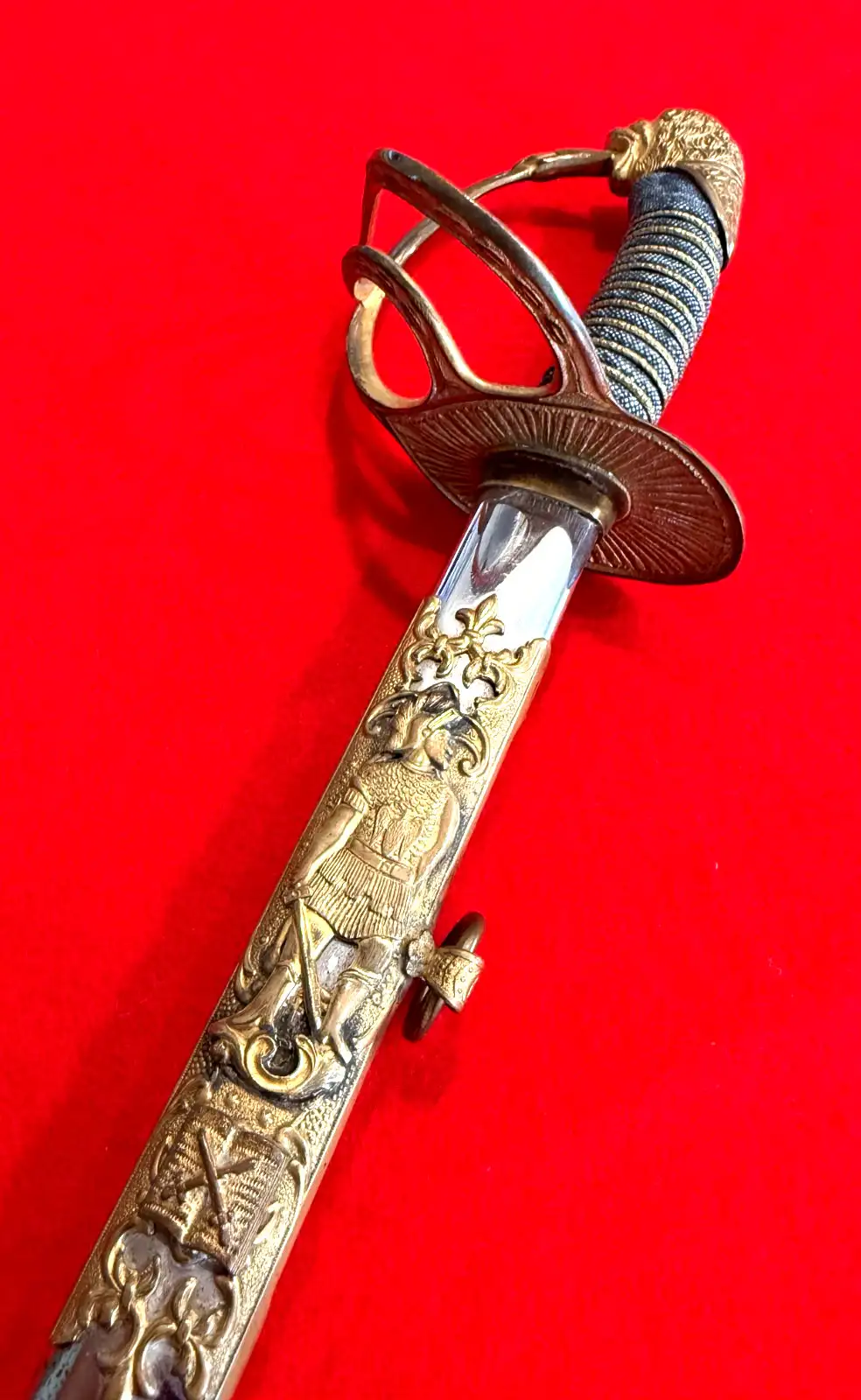
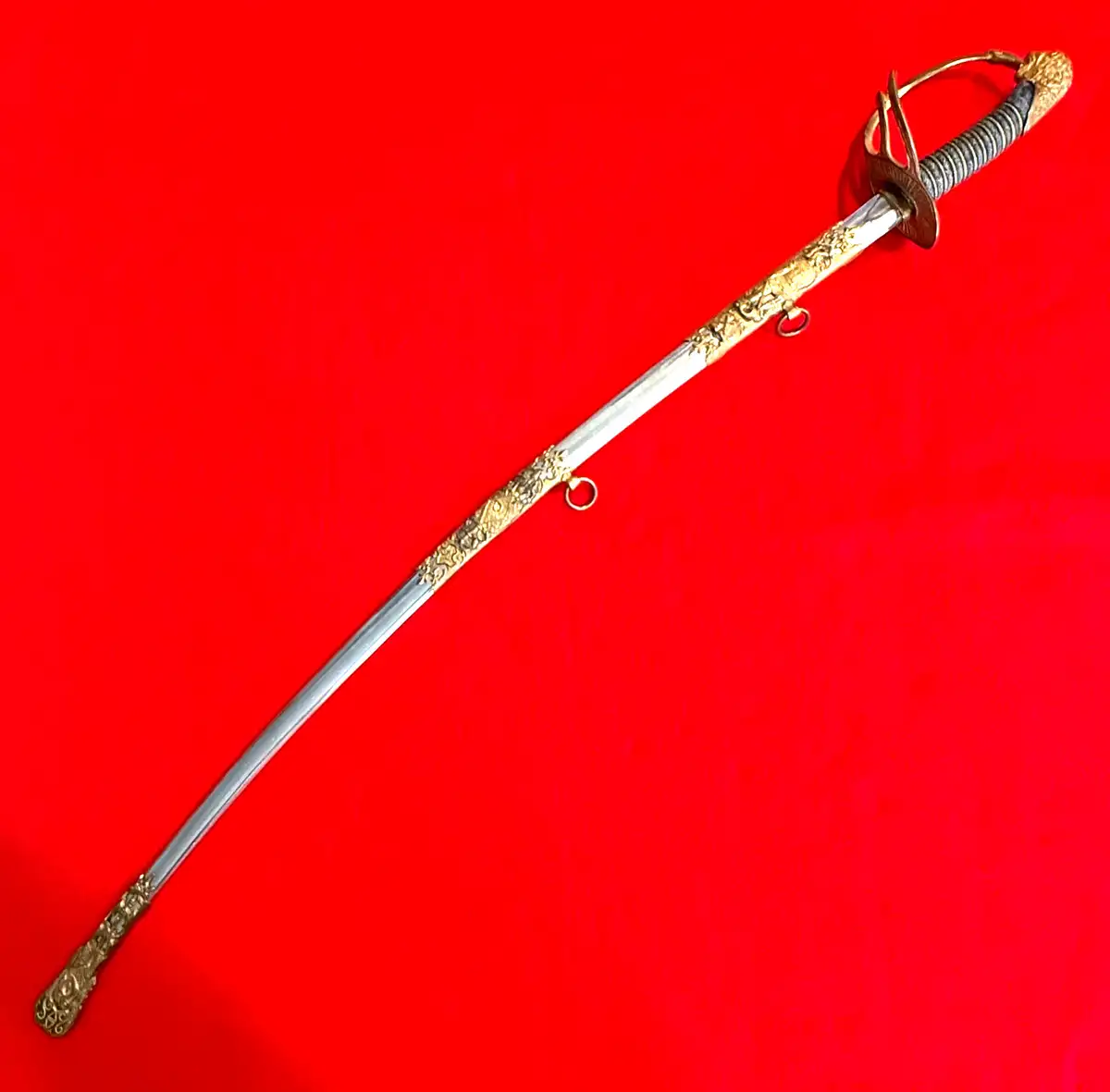
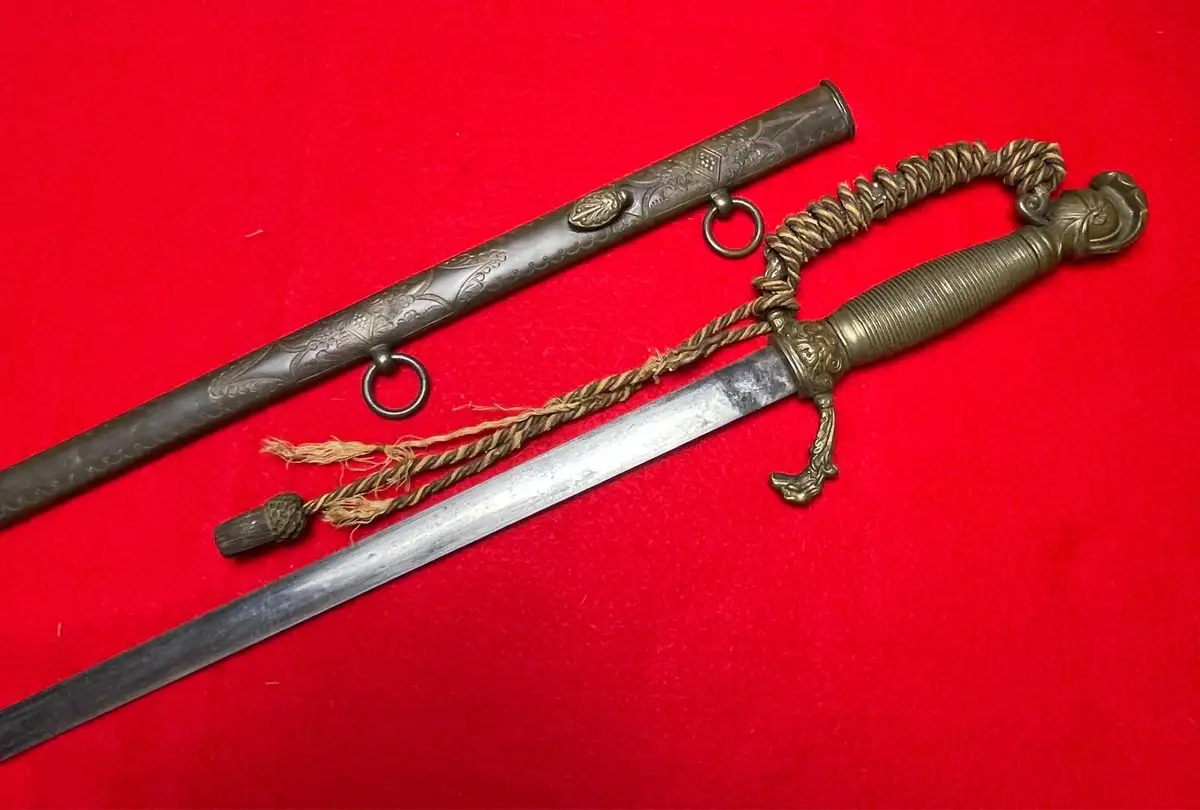
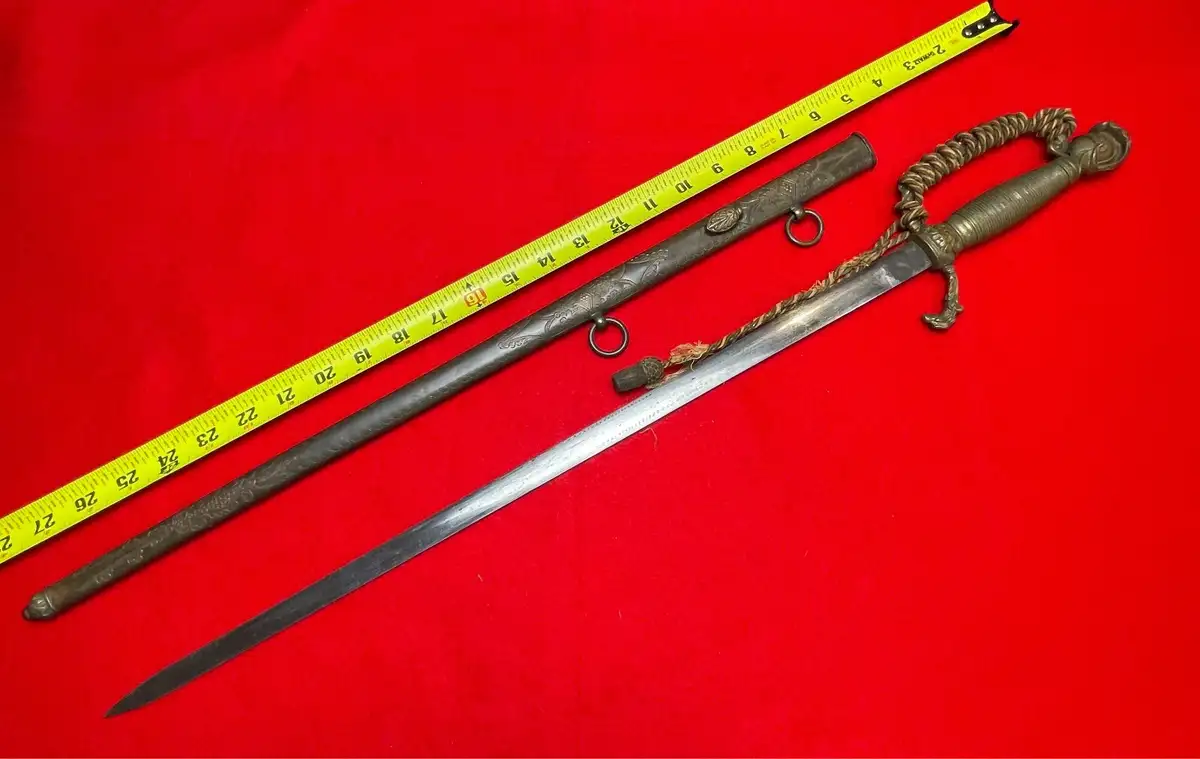
After 1865 the military market for swords collapsed, and the trade that replaced it was fraternal: Knights Templar, Masonic and society swords, made in hundreds of patterns for men who would never draw them.
In 1881 Ames Manufacturing consolidated its sword department with the neighbouring Gaylord Manufacturing Company — Emerson Gaylord's firm, and by then an Ames subsidiary — to form the Ames Sword Company, still at Chicopee. The M. C. Lilley Company of Columbus, Ohio bought it in 1925 and moved the plant west; from 1931 the combined firm traded as Lilley-Ames. The parent company's works passed to A. G. Spalding & Brothers in 1907.
So the word Ames on a blade names two different businesses. Which one you are holding is legible in the mark itself.
What to look for
- Read the place name on the ricasso first, but read it against the map: Cabotville was a village inside Springfield until Chicopee was set off from Springfield on 29 April 1848, so Springfield-marked work (including the Model 1842 Navy boxlock pistols) and Cabotville-marked blades can share a decade, while a Chicopee mark means 1848 or later.
- The maker's name divides on a death. Blades marked N.P. AMES were made while Nathan Peabody Ames Jr. was alive; AMES MFG CO marks come in after he died on 3 April 1847.
- On a Model 1832 foot artillery sword, look for an eagle cast into the pommel — American-made examples have it, while French Modele 1816 and 1831 originals have a different hilt and carry Chatellerault, St. Etienne, Talabot or Thiebaut stamps. Treat the date 1839 with suspicion: reproductions carry it.
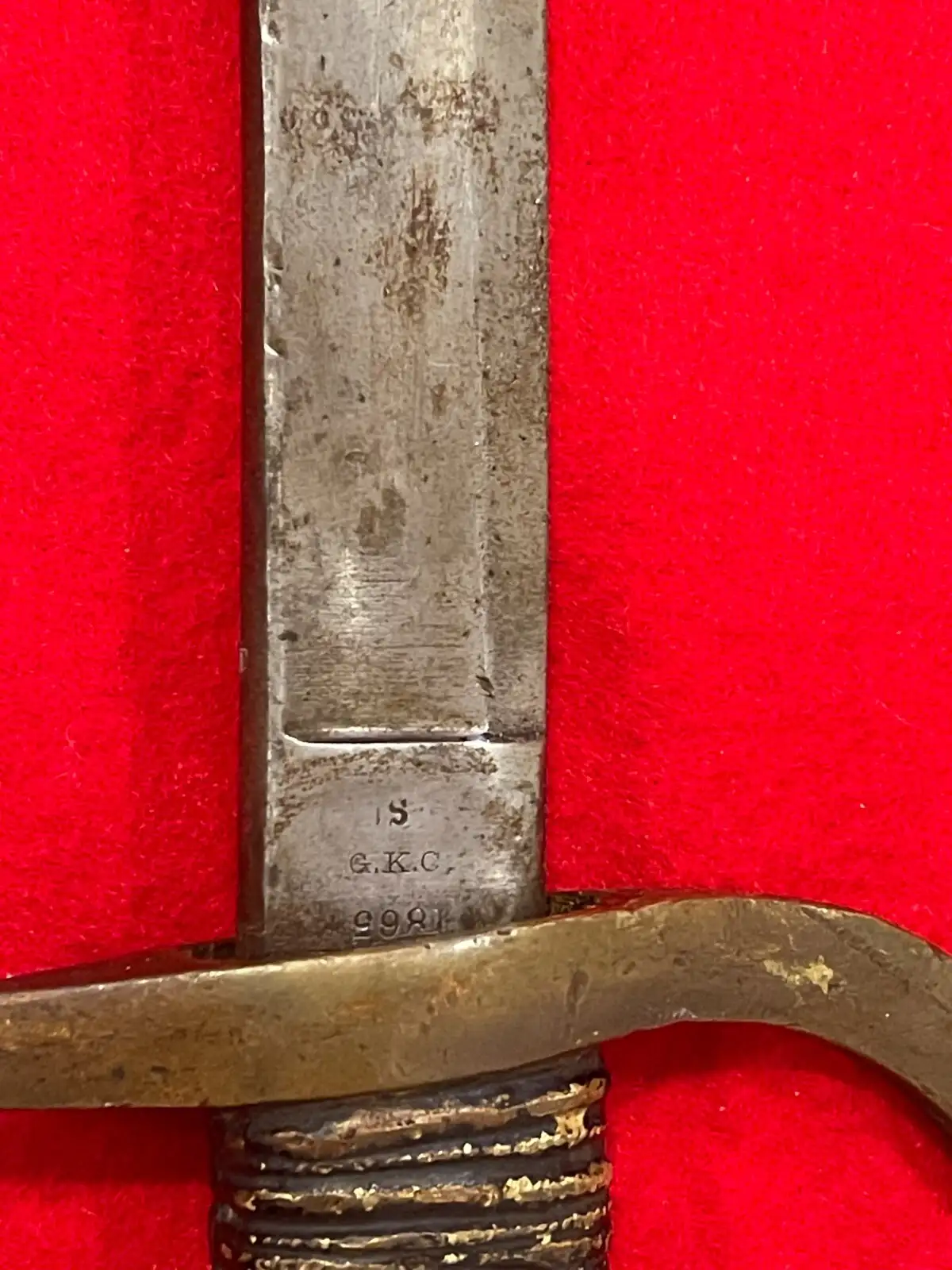
- Turn the blade over and read both faces. Federal deliveries carry US or UNITED STATES, an inspector's initials, and a four-digit year; that year is when the sword was delivered, not when the pattern was adopted, so an 1862-dated Model 1832 is normal rather than odd.
- Inspector initials are worth chasing, but not all of them resolve. H.D.H. is Henry D. Hastings, inspecting between 1862 and 1865, and DT in a script oval on an early Model 1832 is Daniel Tyler; J.H. was used by more than one inspector and cannot be settled from the letters alone. Initials that resolve to nobody on a supposedly federal blade are a reason to slow down.
- AMES MFG CO and AMES SWORD CO are not the same firm. The sword company was formed in 1881 from Ames's sword department and the Gaylord Manufacturing Company, so a Knights Templar or Masonic sword marked Ames Sword Co is fraternal-era work of 1881 or later, whatever the seller says about the Civil War.