German M1889
Known in the trade as M1889.
Two different German swords carry the number 1889 — the cavalry Kavalleriedegen 89 and the Prussian infantry officer's degen — and the guard is what separates them.
Named 1889, in the ranks from 1890
A Prussian ministerial decree of 23 November 1889 settled the name: Kavalleriedegen 1889. The "M" that dealers put in front of the number was dropped when the decree took effect, and modern German literature also files the same sword under Kavalleriepallasch, so neither term in a listing tells you anything is wrong.
The Allerhöchste Kabinettsorder of 21 June 1890 put it into the ranks, in the hands of NCOs and troopers. Dragoon, hussar and uhlan regiments received it, along with the mounted portions of the artillery and the train. Two bodies were excepted by name: the Regiment der Gardes du Corps and all cuirassier regiments. They kept their pallasch.
It displaced the Kavalleriesäbel 1852 and the 1852/79 revision of that same sword among the troopers. Both of those were curved. The 89 is straight and built around the thrust. Officers went on carrying the older sabres.
It arrived as the second weapon on the horse. The whole German cavalry was armed with the lance in 1888 and 1889, not just the uhlans who had carried it before, and the steel-tube lance followed in 1890. The sword was what a trooper came to after the lance.
What the pattern specifies
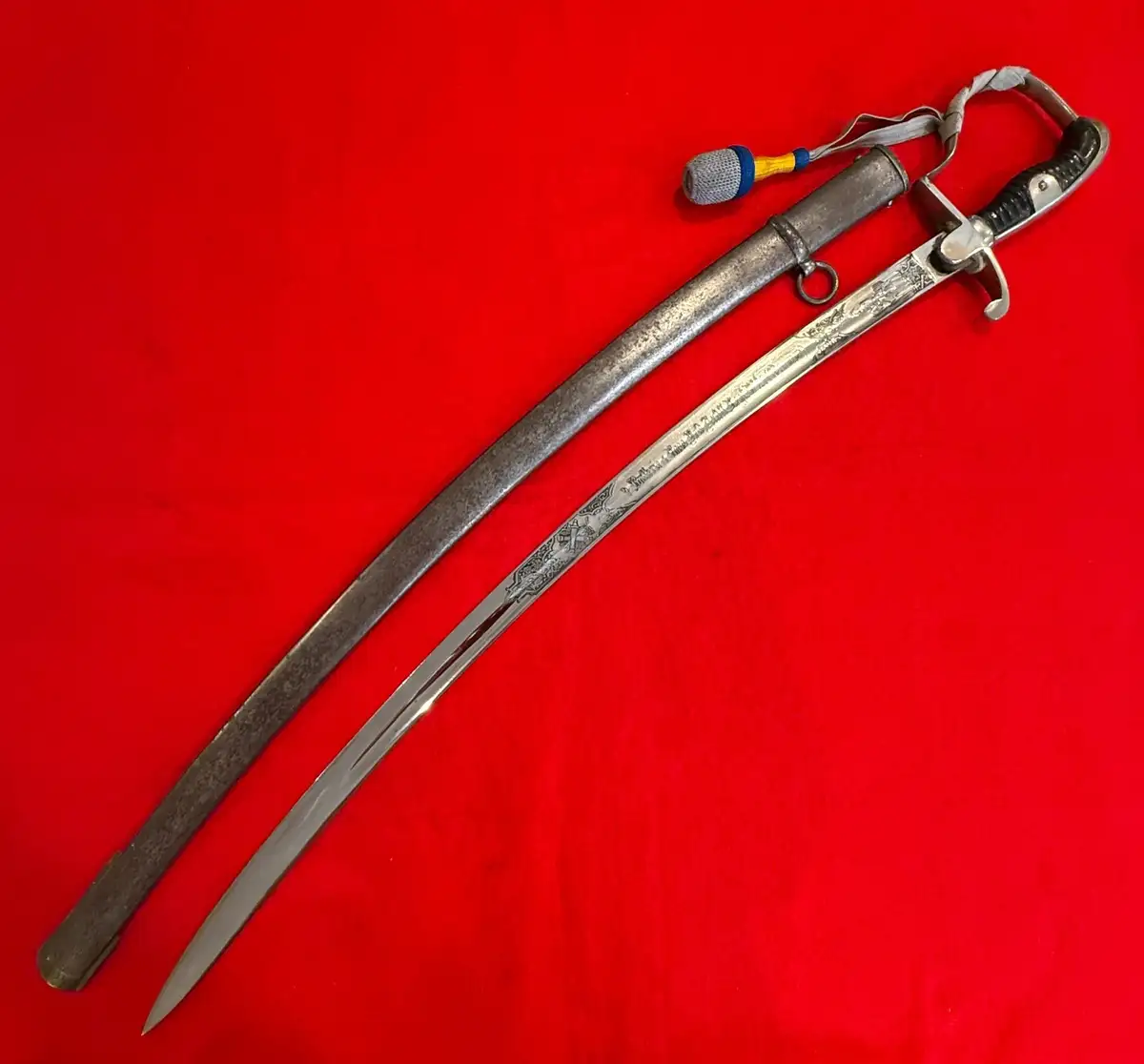
Measured examples run about 95 to 97 cm overall, with blades between 79 and 81 cm — 802 mm and 808 mm are both recorded on issue pieces — and about 2.7 cm wide at the shoulder. Measure from the shoulder, not from the front of the guard.
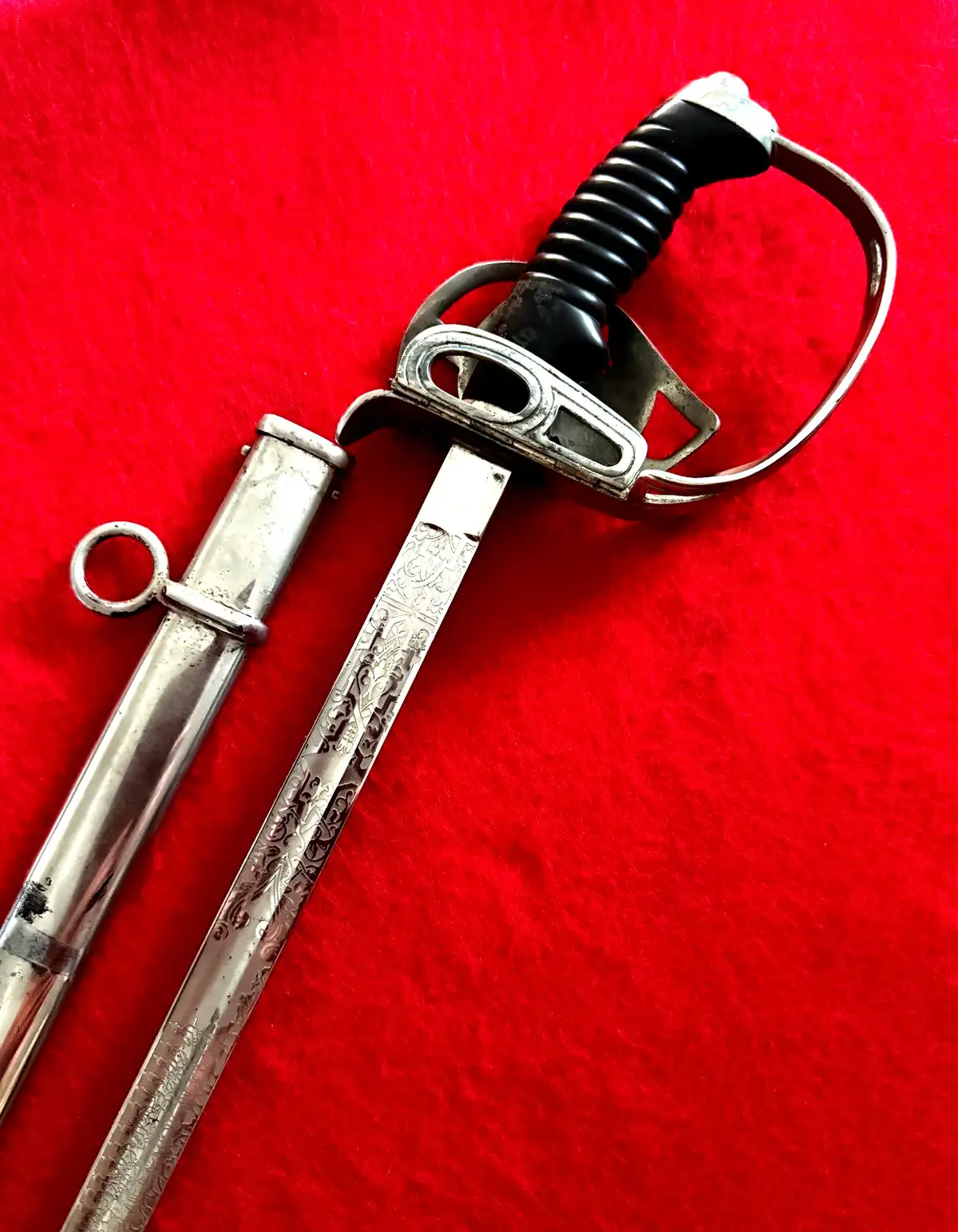
The blade is straight, single-edged and finishes in a spear point. The spine is rounded, a quill or pipe back, and immediately below it runs a single fuller covering about three-quarters of the length. Some examples carry double fullers. The rounded spine is standard, not a variant.
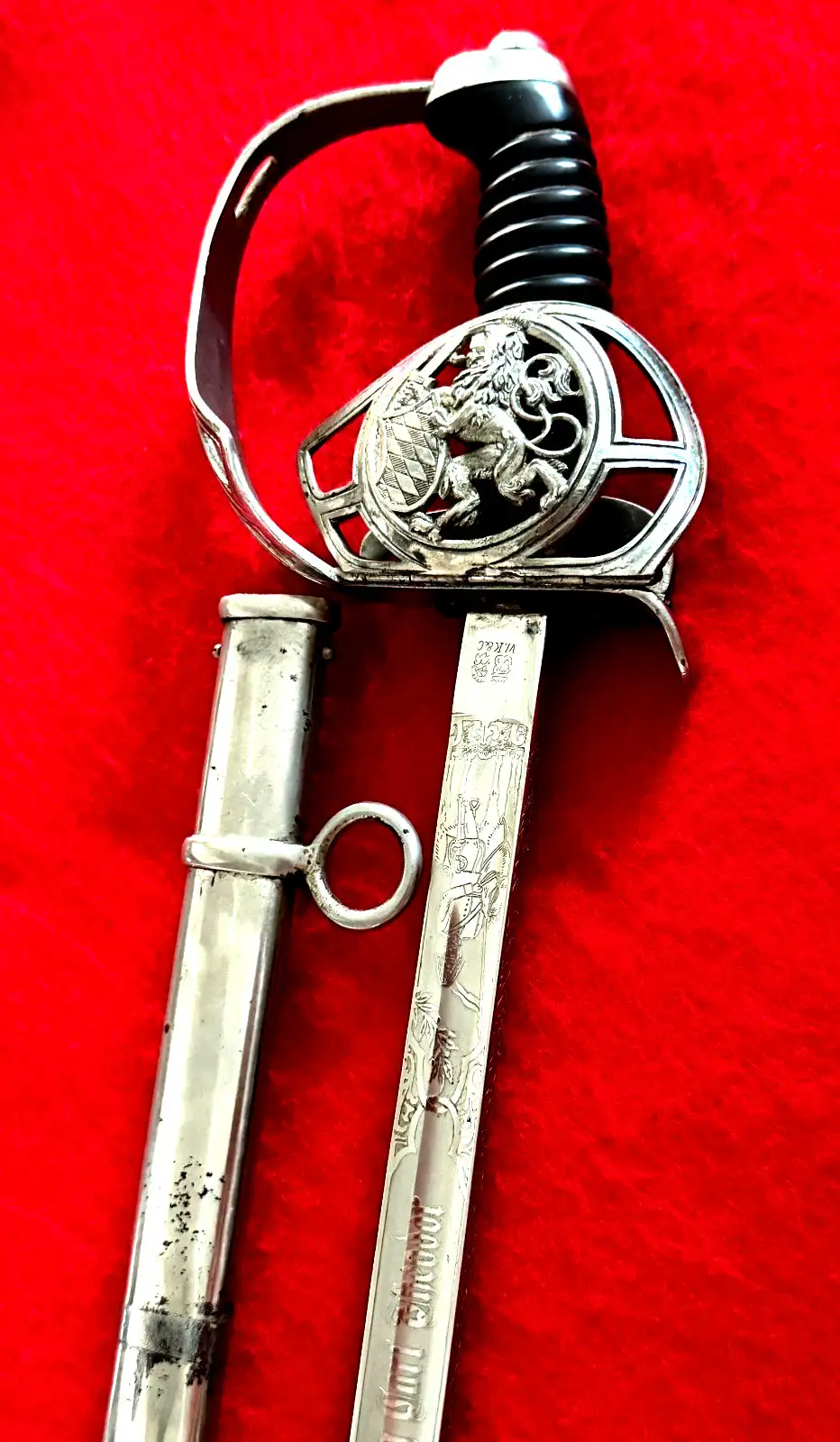
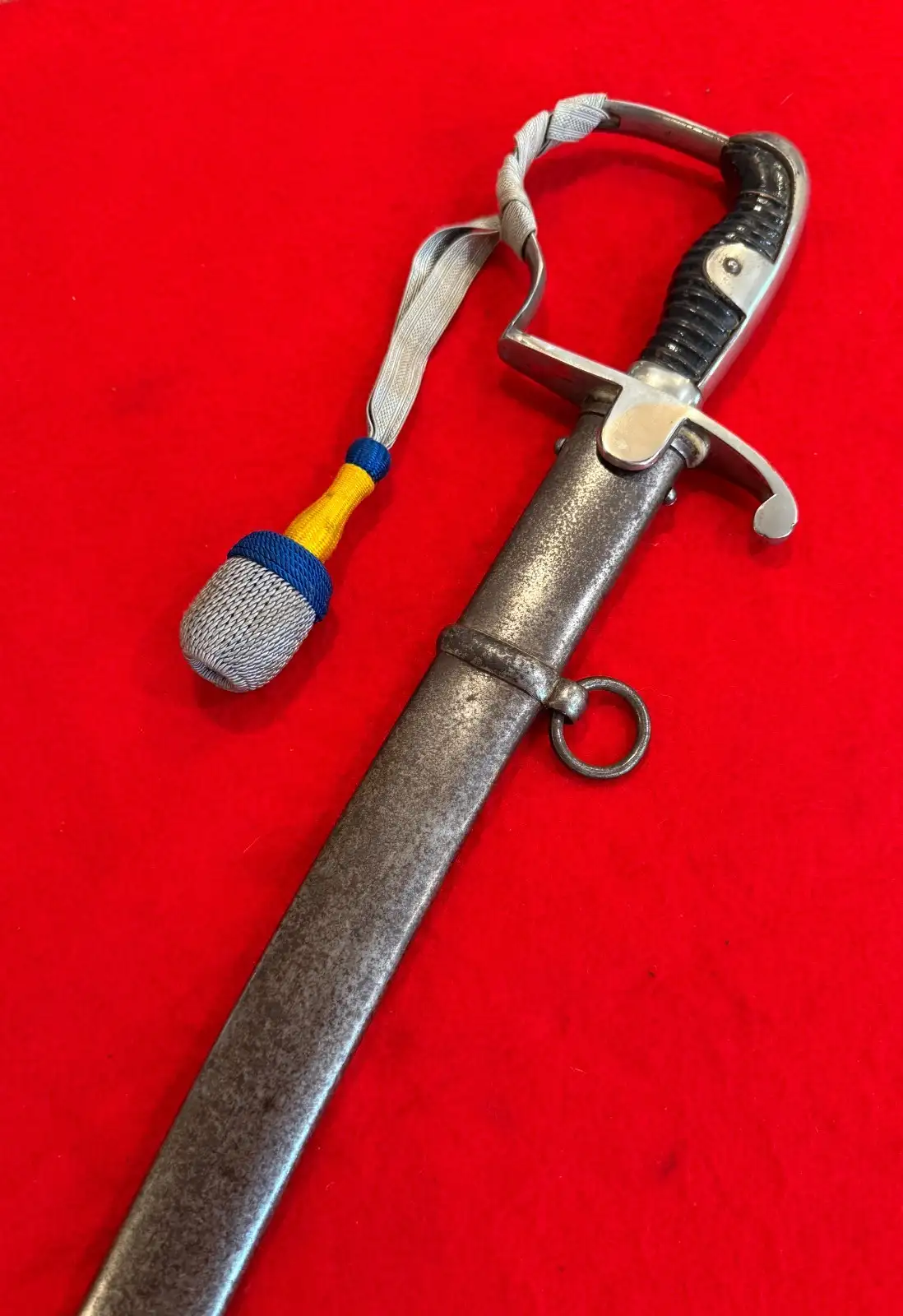
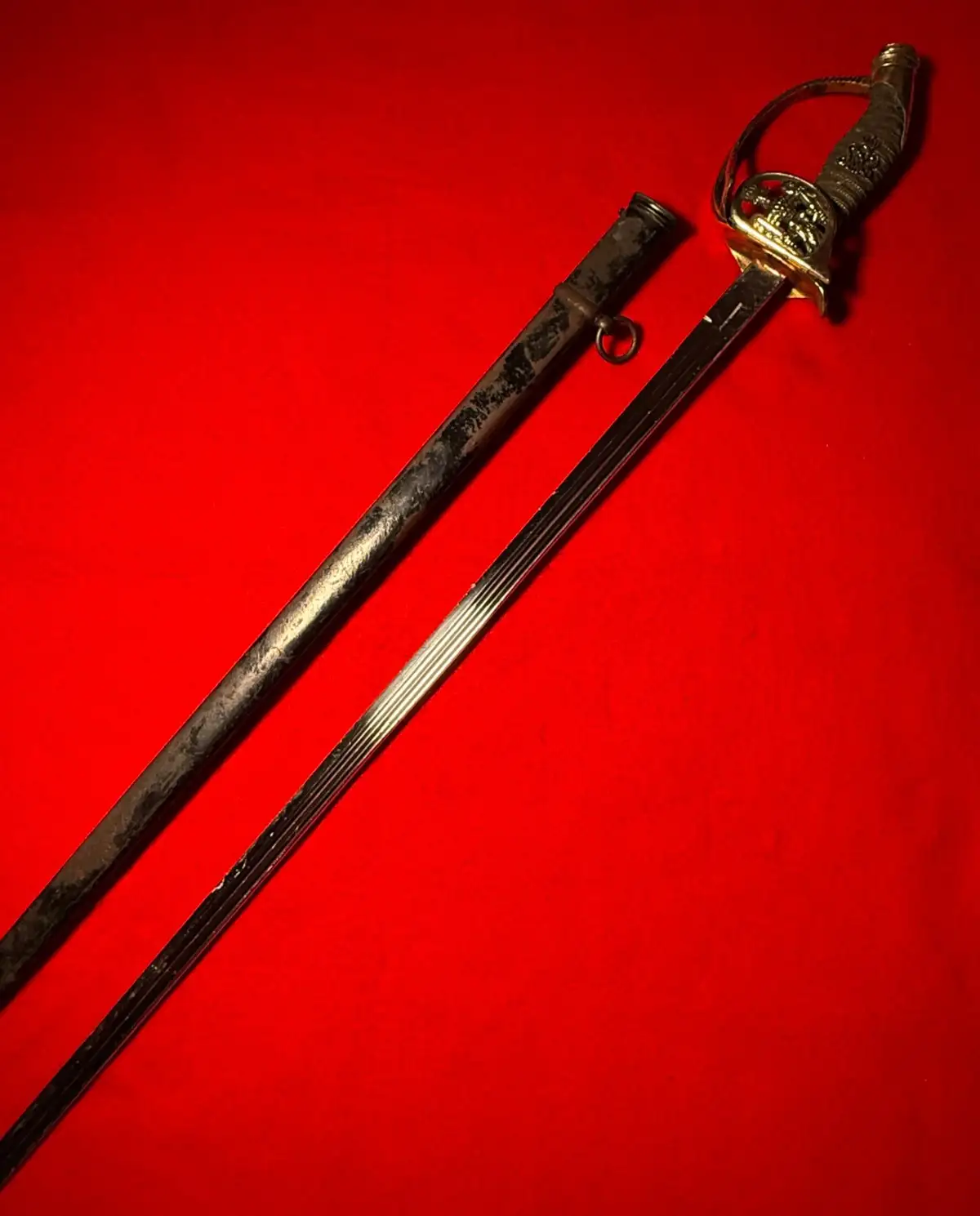
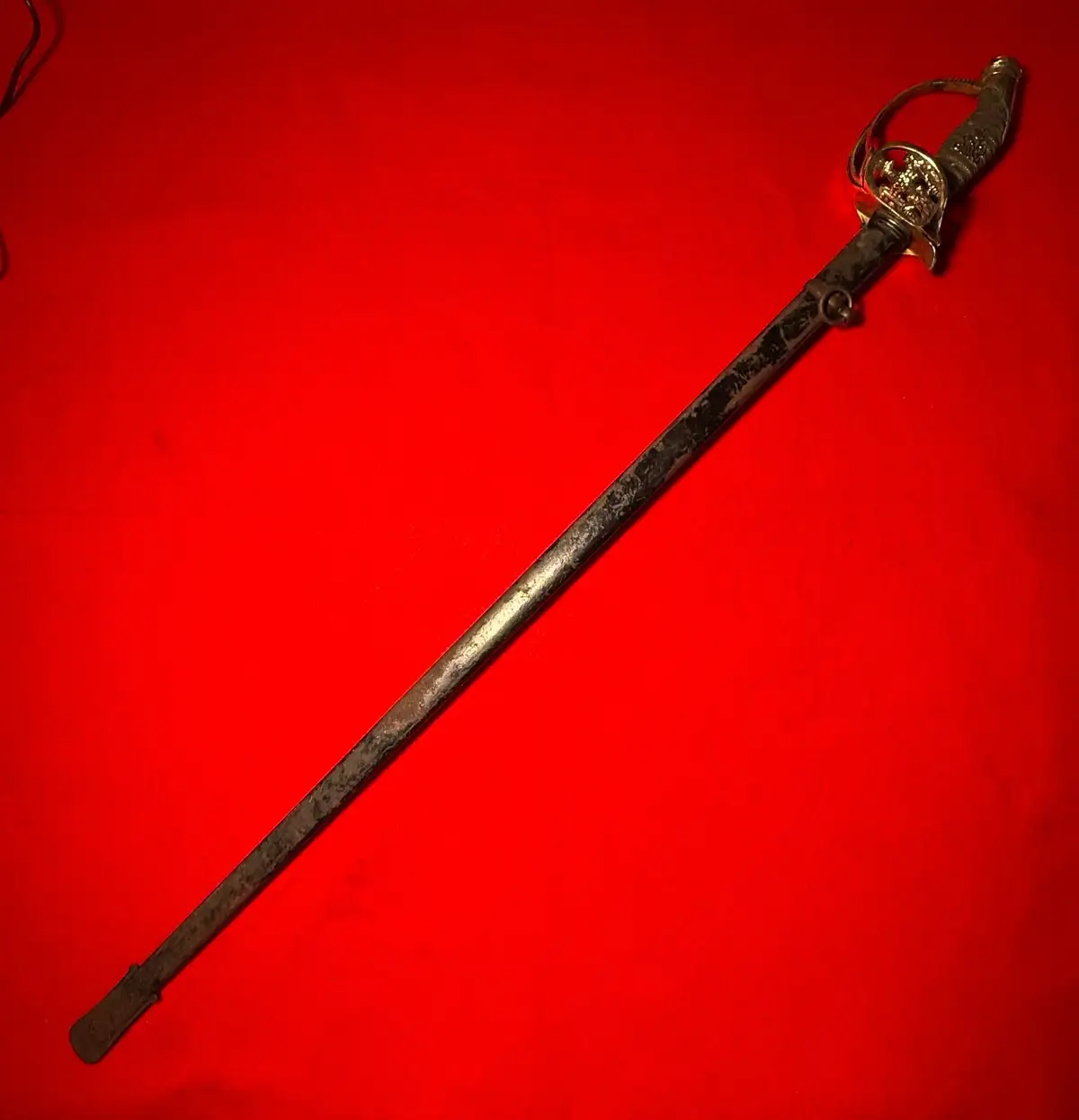
The hilt is the signature. An asymmetric pierced iron basket, usually nickel-plated, with one section hinged so it folds inward against the body when the sword is worn. The state arms sit in that folding section. The grip is ribbed black hard rubber with a pronounced spur for the index finger.
The scabbard is steel with fixed suspension rings on a bar. Two rings were original; the second was dropped after the new carrying device of January 1895, so both arrangements are correct depending on date. Scabbards were blackened from June 1905.
Prussia, Bavaria and the other contingents
The arms in the folding section identify the contingent, not the maker.
Prussian swords carry the crowned eagle with a sceptre in one talon and a sword in the other.
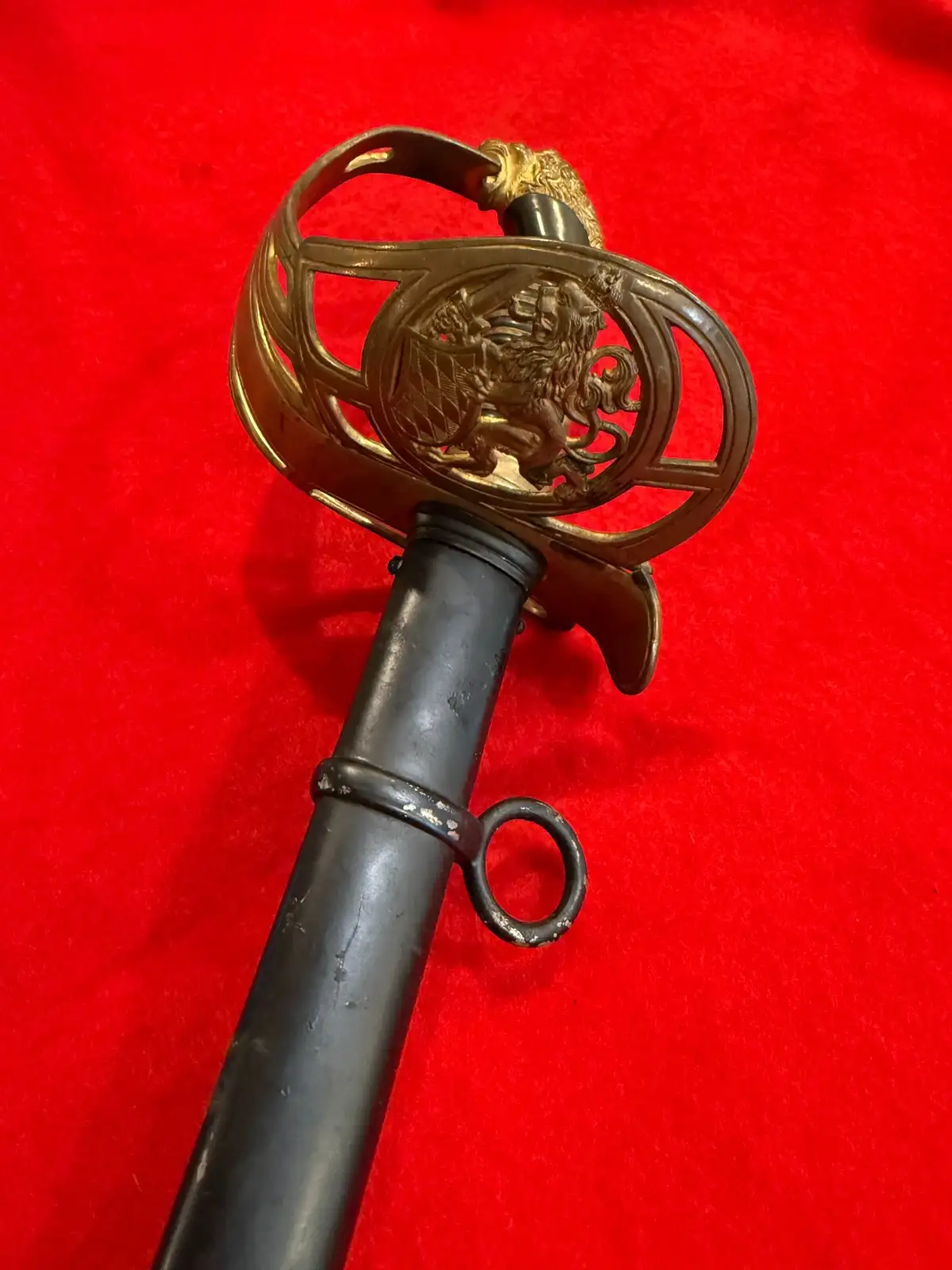
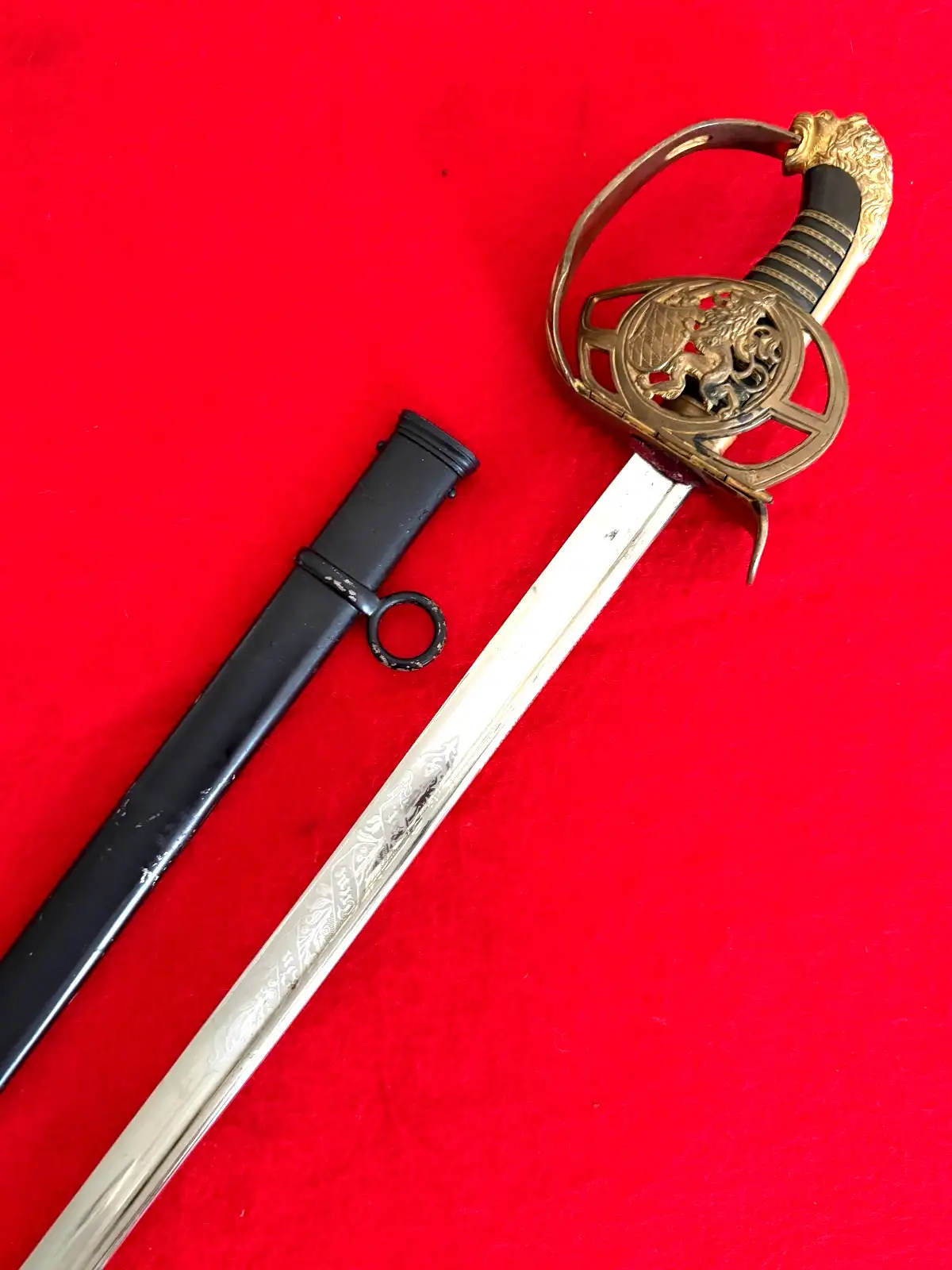
Bavarian swords carry the Bavarian lion with the Bavarian shield. These went to the eight Chevaulegers regiments, the light cavalry peculiar to that contingent.
Other contingents fielded the pattern with their own arms in the same place. The blades under all of them came in large part from the same Solingen houses: Weyersberg, Kirschbaum & Cie., Carl Eickhorn, Alexander Coppel, Robert Broch Erben.
Trooper, officer, and the sword bought privately
An issue sword — a Kammerstück — is government property and marked as such. The rear of the quillon carries a unit stamp in the form regiment, squadron, weapon number. 17.H.4.108 reads as the 17th Hussars, 4th squadron, weapon 108. The scabbard should carry the same number, though swords still matched to their own scabbard are uncommon. Acceptance stamps sit on the blade spine: a crown over a letter, with two digits for the year of inspection.
An Extradegen is the same pattern bought privately. No unit stamp on the quillon, no acceptance marks on the spine. It is usually nickel-plated and often shorter — one measured example carries a 735 mm blade against the 802 to 808 mm of issue pieces. Etched regimental panels are not the test: issue swords carry them too, alongside their stamps.
Cavalry officers are the complication. Many kept an older sabre once the troopers had been re-armed, and officers' versions of the 89 exist as private purchases, without the marks of issue.
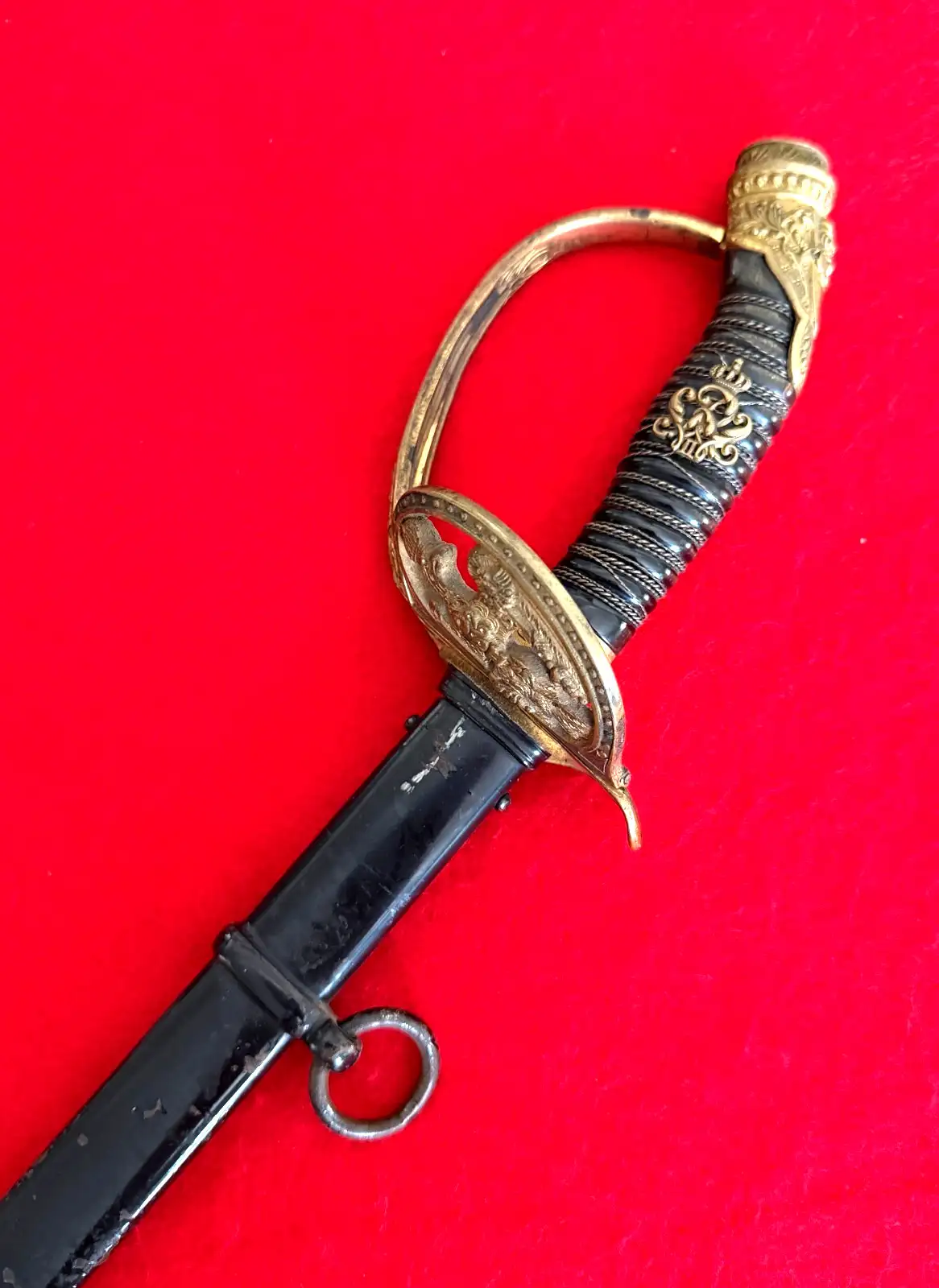
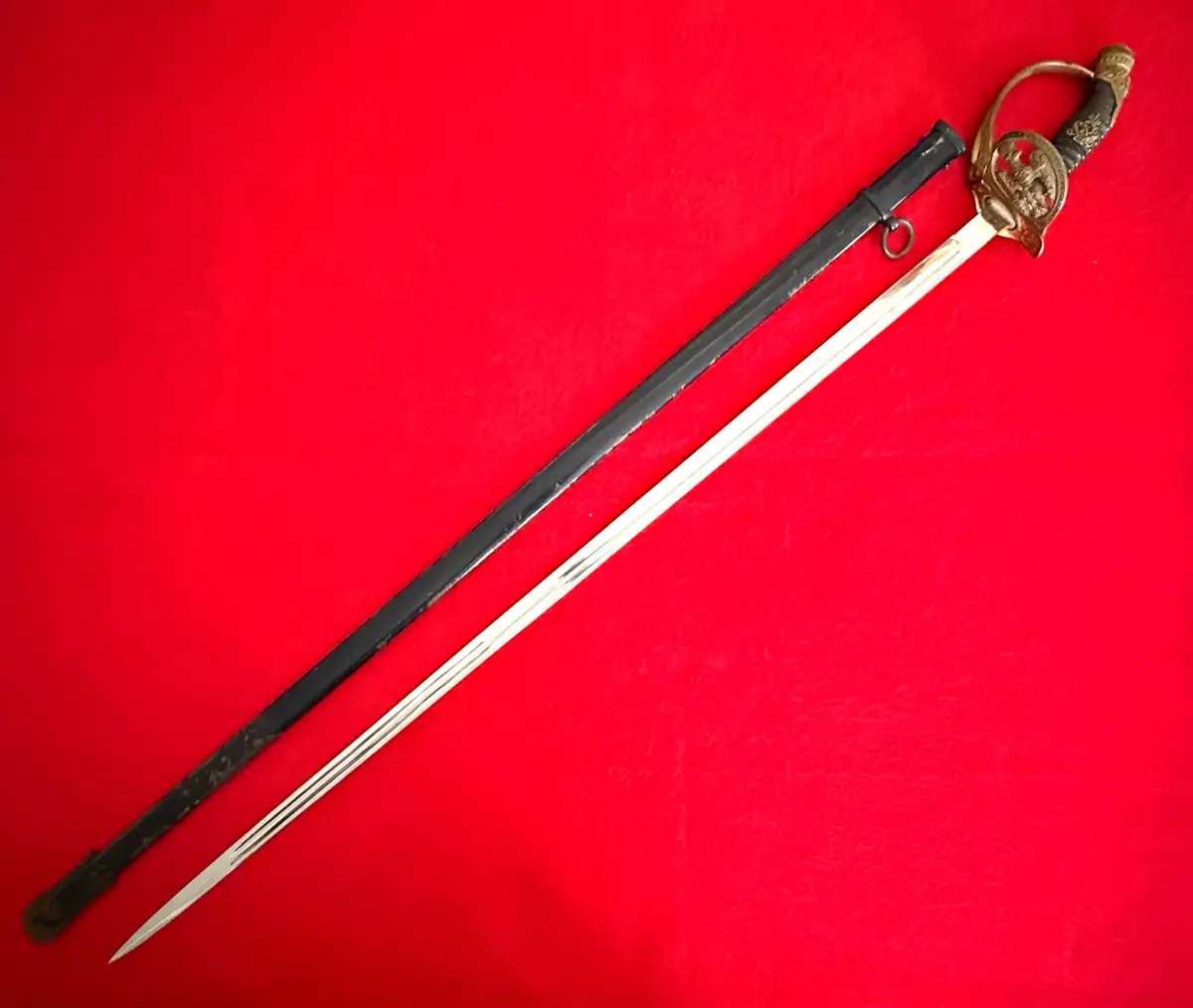
There is also a second M1889 altogether. The Prussian Infantry Officer's Degen of 1889 — IOD 89 to collectors — was carried by infantry officers under Wilhelm II. A nickel-plated blade of about 76 cm sits in a brass hilt whose folding shell carries the crowned Prussian eagle with sceptre and sword, and the cypher W R II. The grip is a wooden core wrapped in ribbed black leather under twisted wire, ray skin on some examples; the scabbard is black-painted steel with a single band and ring below the throat. Wartime examples were made with iron hilts in place of brass.
Telling it from the swords next to it
Kavalleriesäbel 1852. Curved blade, iron bar guard built from Terz and Quart bows, leather-covered wooden grip on troop pieces. If the blade curves, you are not looking at an 89.
Kavalleriesäbel 1852/79. The /79 marks a blade change made to the 1852 from 1879; the sabre remains curved and the hilt remains one piece of iron, with no hinge and no state arms set into it. Here is the trap. The 89 has a rounded quill-back spine and so does the modified 1852 blade, so the spine separates nothing. Read the curve and read the guard.
IOD 89 against KD 89. Same year, different sword, one number in the listing. The cavalry degen has an iron or nickelled basket with a hinged section, a ribbed hard rubber grip and, on issue pieces, unit stamps on the quillon. The infantry officer's degen has a brass hilt, a wire-bound leather grip, no unit stamps, and one ring on the scabbard.
Seitengewehr 98. The M1898 is a bayonet for the Gewehr 98 rifle: 650 mm overall, a 530 mm blade, wooden grip scales, and a mortise slot in the grip taking the T-bar beneath the rifle's barrel, the Mauser design having done away with the muzzle ring. Its own family adds noise — the 98/02 carries a 44 cm blade, the 98/05 a 37 cm one. Sawback blades were issued to pioneers and some NCOs and many were later ground smooth; a sawback is a variant within the family, not a separate model, and never appears on the 1889 swords.
After 1918
The form outlived the empire. Reichswehr infantry officers wore swords catalogued as Modell wie 1889, the same outline with the crown and the imperial cypher gone. An uncrowned eagle and no W R II point to a post-1918 hilt.
Under the Nazi state from 1933, the Solingen firms made army officers' swords again, on new patterns, carrying the national eagle with the swastika on the hilt. A hilt bearing that eagle is a sword of that period. It is not an Imperial 1889, and the two are sold under the same search terms often enough to be worth stating.
What to look for
- Flex the basket: one section of the KD 89 guard is hinged so it folds inward, and the state arms sit in that folding section — a rigid one-piece guard is a different sword.
- Read the arms in that section: crowned eagle with sceptre and sword for Prussia, the Bavarian lion with the Bavarian shield for Bavaria.
- Check the rear of the quillon for an issue stamp in the form regiment, squadron, weapon number (for example 17.H.4.108), then check the scabbard for the same number.
- Look along the blade spine for an acceptance stamp: a crown over a letter with two digits for the inspection year. Its absence points to a privately bought Extradegen, not to a fake.
- Measure the blade from the shoulder rather than the guard: issue cavalry blades run 79 to 81 cm, and privately purchased ones can be several centimetres shorter.
- Feel the grip: ribbed black hard rubber with an index-finger spur is the cavalry pattern, while a wire-bound leather grip in a brass hilt is the infantry officer's degen.